

Pivotal Phase 3 Trial of Zygel in Severe Fragile X Possible This Year
Zynerba Pharmaceuticals reported receiving advice from the U.S. Food and Drug Administration (FDA) on the design of an upcoming Phase 3 clinical trial meant to confirm previous trial findings supporting Zygel as a cannabidiol treatment in a specific subset of Fragile X syndrome patients. The new trial, called RECONNECT, is expected to launch before October, and will mainly enroll children and adolescents with a complete (100%) methylation of FMR1, the gene mutated in Fragile X.
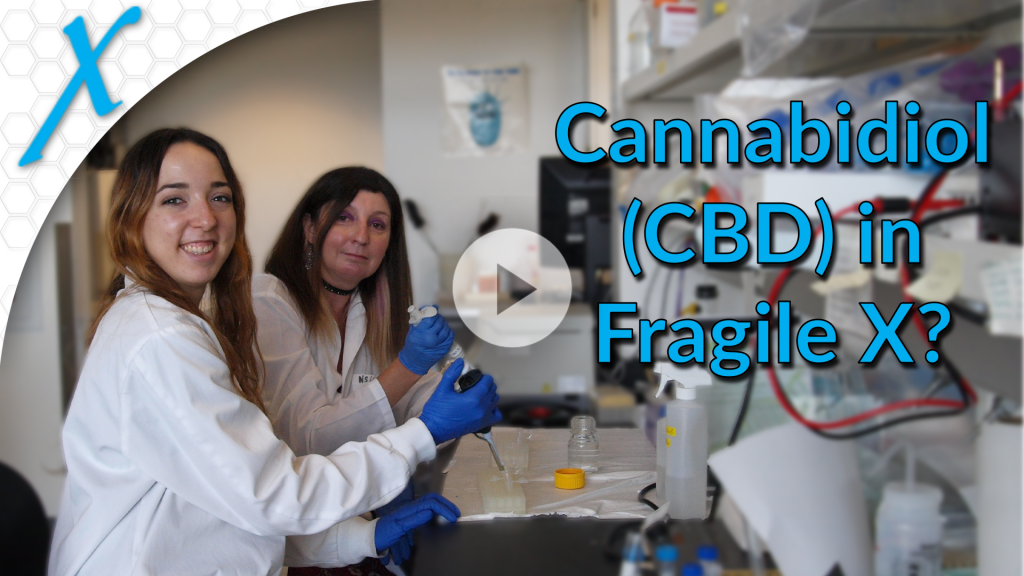
Pharmacotherapeutic Effects of Cannabidiol (CBD) in Fragile X syndrome (FXS) and Autism Spectrum disorder (ASD)
This study tested CBD (cannabidiol) treatment in male and female Fragile X mice to learn how and why it works and whether gender affects responses to CDB treatment.

Cellular-Specific Therapeutic Targeting of Inhibitory Circuits in Fragile X Syndrome
The team studied how inhibitory brain circuits malfunction in Fragile X and tested ways to restore balance by targeting mGluR and endocannabinoid signaling.

Auditory Dysfunction in Fragile X Syndrome in a Mouse Model of Fragile X
FRAXA-funded studies found Fragile X mice show altered auditory circuit function with delayed startle timing and reduced prepulse inhibition, mirroring human sound sensitivity.

Parkinson’s Therapy May Hold Promise for Fragile X
A study funded by FRAXA in Italy has encouraging results for people with Fragile X: drugs that block adenosine receptors (A2A) reversed signs of Fragile X in a mouse model.
"One of the most intriguing things about this study is that it points to an entire drug class (not just the one drug used) as potentially therapeutic for Fragile X. Many available compounds block A2A receptors, and we know they are safe and effective.

Beneath the Surface of Fragile X Syndrome: Study Sheds Light on What’s Happening in Nerve Cells
This FRAXA-funded project has turned up some surprising results. At first, it might seem Kurosaki and Maquat have found yet another cellular process which is malfunctioning in Fragile X. But this finding is intimately related to previous findings of abnormal protein synthesis and misregulated transcription in Fragile X. FMRP (the protein lacking in Fragile X syndrome) is involved in chaperoning messenger RNAs within cells to active sites, and in controlling their translation into many different proteins. Some of these proteins are transcription factors, which feed back to the nucleus to control gene expression.
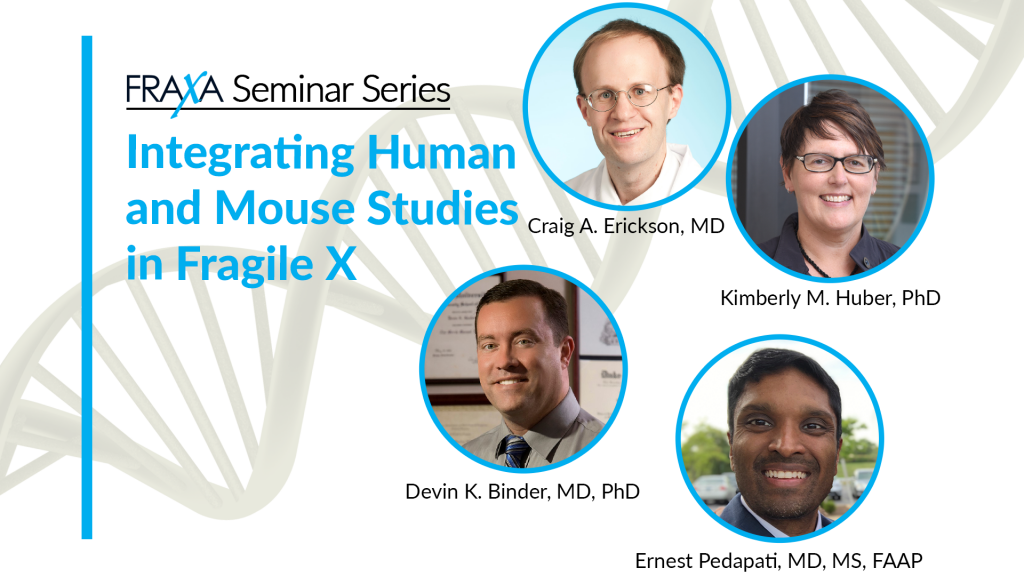
Integrating Human and Mouse Studies in Fragile X Syndrome – an NIH Center Approach
Presentations by Craig Erickson, Ernest Pedapati, Devin Binder, and Kimberly Huber about their research on Fragile X as part of their NIH Center of Excellence.
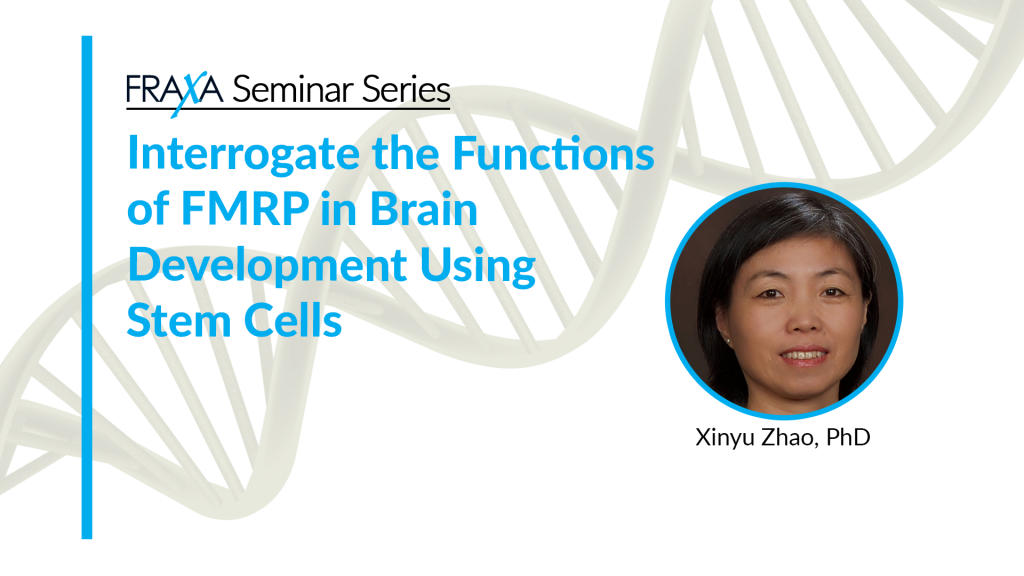
Interrogate the Functions of FMRP in Brain Development Using Stem Cells
Dr. Xinyu Zhao of the Waisman Center and Department of Neuroscience at University of Wisconsin-Madison joins us in this seminar to present Interrogate the Functions of FMRP in Brain Development Using Stem Cells.
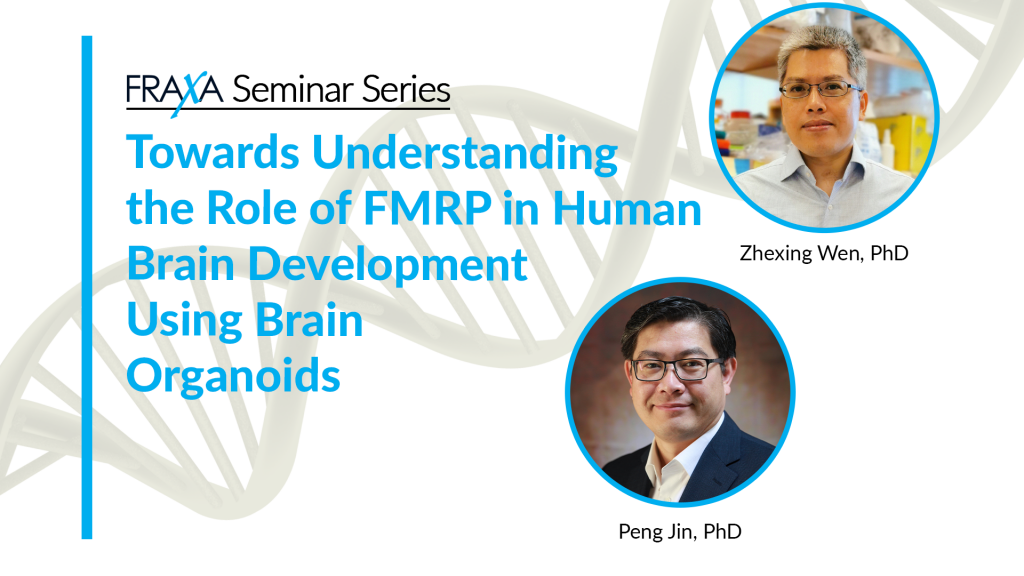
Towards Understanding the Role of FMRP in Human Brain Development Using Brain Organoids
Dr. Zhexing Wen and Dr. Peng Jin of the newly funded Fragile X Center of Excellence at Emory University School of Medicine join us in this seminar to present about Understanding the Role of FMRP in Human Brain Development Using Brain Organoids.

Bryostatin-1 in Long-term Use Seen to Arrest Fragile X Symptoms in Mouse Model
Long-term, but not short-term, treatment with bryostatin-1 — Neurotrope’s lead investigational therapy — arrested such behavioral and cognitive symptoms as hyperactivity, difficulties with daily life activities, and learning and memory deficits in a mouse model of Fragile X syndrome.

Positive Results Reported in Phase II Fragile X Clinical Trial of PDE4D Inhibitor Zatolmilast from Tetra Therapeutics
Today, Tetra Therapeutics announces the first unequivocally positive phase 2 clinical trial in Fragile X syndrome, press release below. The results do not depend on carving out a subset of patients or post hoc analysis.

Overcoming the Placebo Effect in Fragile X Clinical Trials
In a placebo-controlled clinical trial, some participants are given an experimental medication, while others are given a placebo. Participants do not know whether they are taking medicine or placebo. In theory, this can allow researchers to rule out the placebo effect by comparing outcomes among the two groups. But, per Wexler (2020) “having a strong placebo effect can obscure any real effect of the therapy being investigated”.

Zygel May Improve Behavior in Children With Severe Fragile X, Trial Data Suggest
Zynerba presented clinical trial results for Zygel at a recent neurology conference. Zygel, an experimental cannabidiol (CBD) gel, may reduce behavioral abnormalities in children with Fragile X syndrome who have more severe disease.
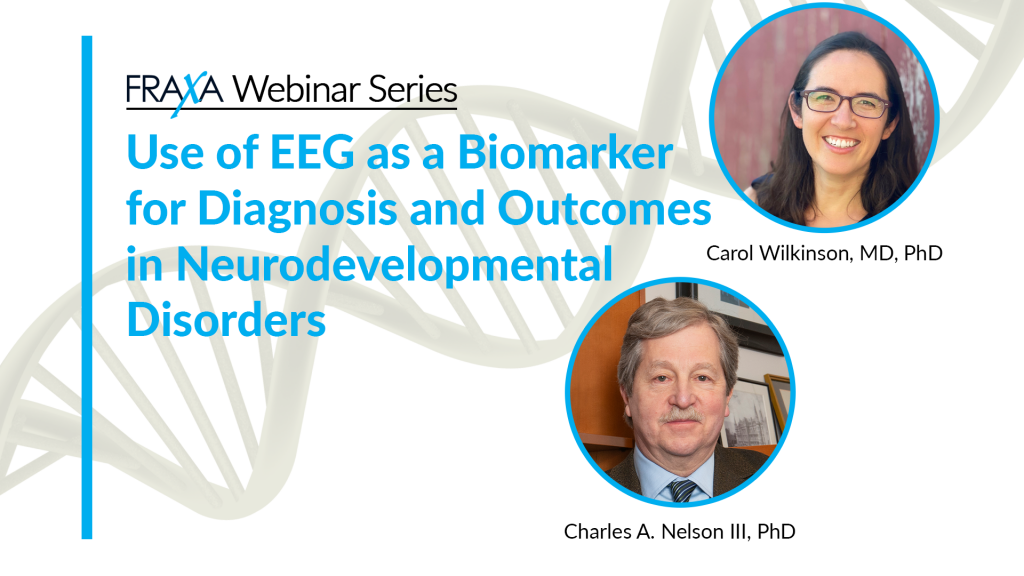
Use of EEG as a Biomarker for Diagnosis and Outcomes in Neurodevelopmental Disorders
A series webinars focused on current topics in Fragile X research featuring Charles A. Nelson III, PhD, Professor at Harvard Medical School and Carol Wilkinson, MD, PhD, Instructor at Boston Children’s Hospital.
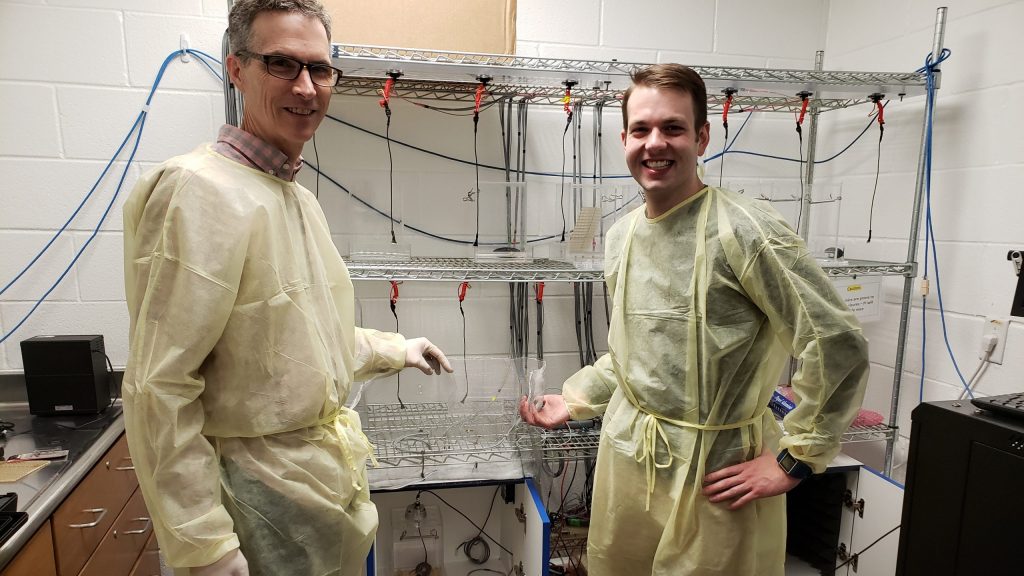
Auditory System Dysfunction and Drug Tolerance in the Fragile X Mouse
A $90K FRAXA grant will help uncover why Fragile X causes sound hypersensitivity and test ways to correct brain circuit dysfunction linked to auditory overload.
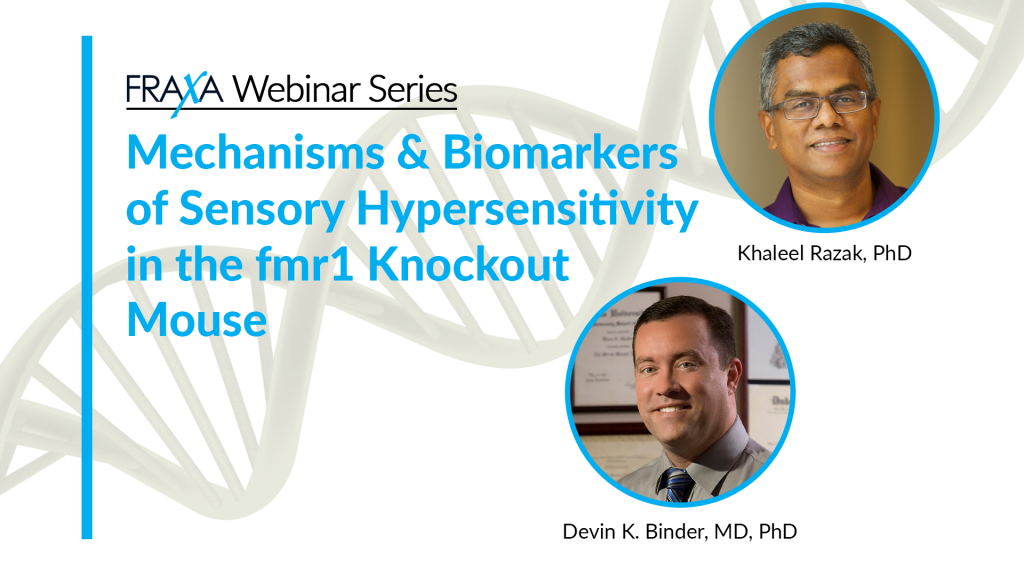
Mechanisms and Biomarkers of Sensory Hypersensitivity in the fmr1 Knockout Mouse
In this Fragile X research webinar we hear from Devin K. Binder, MD, PhD, Professor, University of California at Riverside Medical School and Khaleel Razak, PhD, Professor, University of California at Riverside as they present about Mechanisms and Biomarkers of Sensory Hypersensitivity in the fmr1 Knockout Mouse.

Aripiprazole (Abilify) in the Treatment of People with Fragile X: An Anecdotal Account
The aim of this article is to discuss the use of Abilify (generic name: aripiprazole) as a treatment for people with Fragile X syndrome (FXS). As an “off-label” prescription, Abilify targets behaviors such as irritability, aggression, self-injury and severe tantrums.
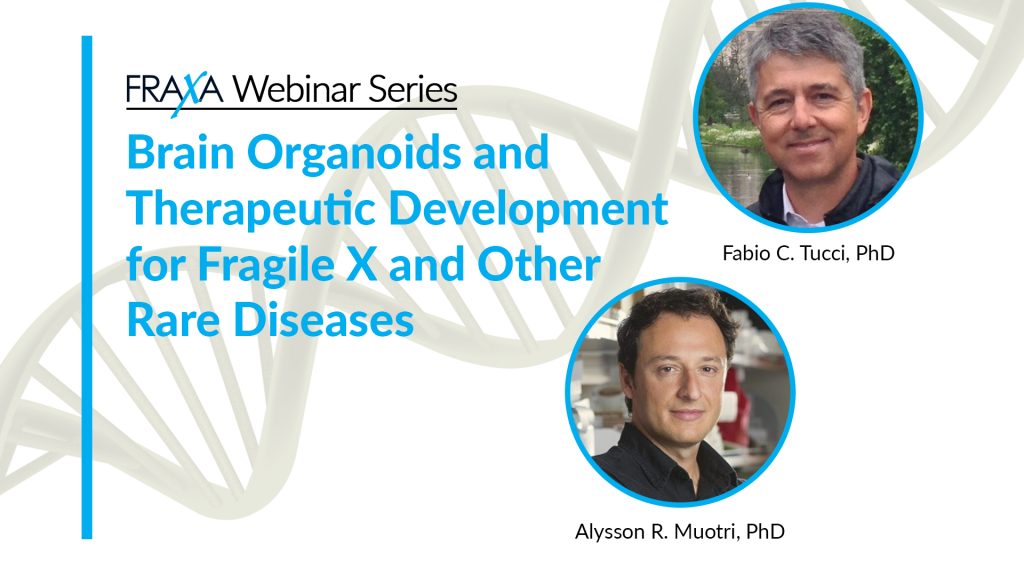
Brain Organoids and Therapeutic Development for Fragile X and Other Rare Diseases
This is the first in a series of webinars focused on current topics in Fragile X research. In this webinar we hear from Alysson R. Muotri, PhD, Professor at University of California San Diego Stem Cell Programand Fabio C. Tucci, PhD, Chief Operating Officer and co-founder at Epigen Biosciences, Inc.

Scientists Find a New Way to Reverse Symptoms of Fragile X
FRAXA Investigator and MIT Professor Mark Bear and his colleagues have identified a valuable new target for Fragile X therapeutics: GSK3 alpha. Several FRAXA research teams previously identified GSK3 beta as a treatment target for Fragile X. The catch is that, so far, GSK3 beta inhibitors have proven too toxic for regular use. Dr. Bear’s new discovery opens up the possibility of developing more selective compounds with less toxicity and fewer side effects. Interestingly, lithium inhibits both GSK3 versions – alpha and beta.

Companies Move to Advance Potential Cognitive Treatment for Fragile X
Tetra Therapeutics and Shionogi announced plans to expand their partnership supporting BPN14770, a treatment candidate for disorders marked by cognitive and memory deficits, including Fragile X syndrome and Alzheimer’s disease. The agreement builds on an earlier collaboration between the two companies, and aims to further accelerate BPN14770’s development and potential marketing. It is currently in clinical testing in both Fragile X and Alzheimer’s patients.

Drug Repurposing for Rare Disease and the Future of Health – The Genetics Podcast
In this double-bill episode of The Genetics Podcast, Dr. Patrick Short talks to two key rare disease researchers in the field: Dr. Bruce Bloom, CCO of Healx, and Dr. Mike Tranfaglia, CSO of FRAXA. Both draw on their wide-ranging personal and professional experiences to discuss the successes and opportunities of drug repurposing, the power of using machine learning, and the work they’ve been doing to aid in finding effective treatments for Fragile X.

Less Active Immune System Evident in Fragile X Patients, Study Suggests
People with Fragile X syndrome are more likely to develop infections, but are less susceptible to autoimmune disorders than the overall population, a new study found. Taken together, this suggests that the immune system is underactive in this patient population. The study, titled, “The phenotypical implications of immune dysregulation in Fragile X syndrome,” was published in the European Journal of Neurology.

Targeting Adiponectin to Treat Fragile X Syndrome
Boosting adiponectin, a hormone that regulates metabolism, may improve cognition and behavior in Fragile X. Early results suggest it can restore brain plasticity.

Targeting Mitochondria in Human Fragile X Syndrome Neurons
Fragile X brain cells have fewer, smaller mitochondria. This team tested mitochondria-boosting drugs that improved symptoms in mice to see if they can help humans.