

GABA-A Receptor in Fragile X Syndrome
Published results from Dr. Frank Kooy reveal how GABAA receptor changes may hold the key to treating Fragile X syndrome.

Characterization of a Novel CYFIP1 – Derived Peptidomimetic Restoring the Dysregulated mRNAs Translation: Toward An Innovative Therapeutic Strategy for FXS
This team is designing tiny “peptidomimetic” drugs that mimic FMRP’s function to rebalance protein production in the brain, aiming to treat Fragile X at its source.

Clinical Trial of Metformin for Fragile X Syndrome
FRAXA-funded open-label trial found that metformin led to increased GABA-mediated cortical inhibition, suggesting metformin modulates core Fragile X pathways.
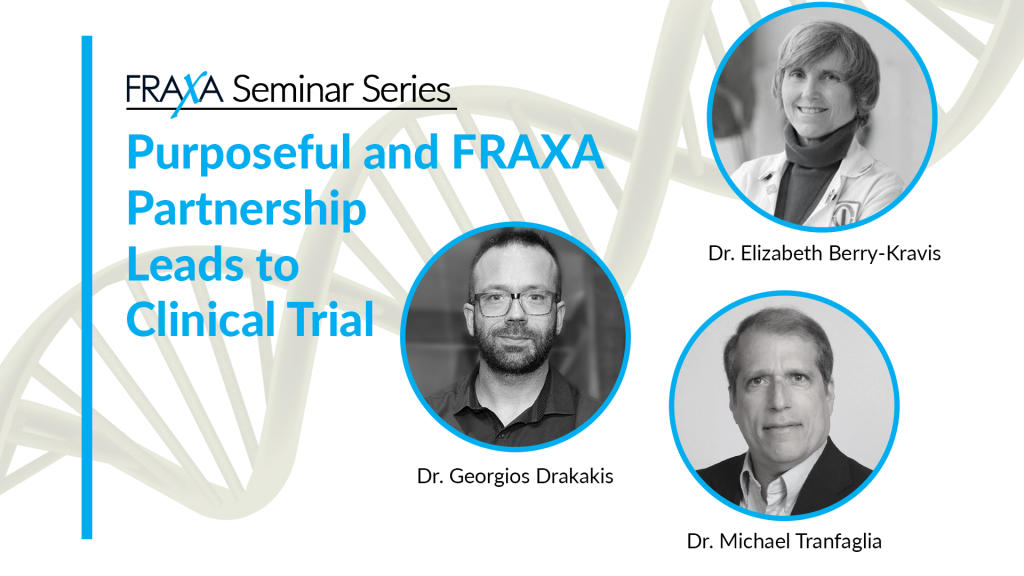
Purposeful and FRAXA Partnership Leads to Clinical Trial
AI and FRAXA-DVI identified a drug + supplement combo that reversed all Fragile X symptoms in mice. A clinical trial tested this in adults with Fragile X.

Inhibiting Nonsense – Mediated mRNA Decay: A Potential Treatment Approach for Fragile X
This team previously discovered runaway nonsense-mediated mRNA decay (NMD) in cells of Fragile X patients. They will now test drugs to reduce NMD.
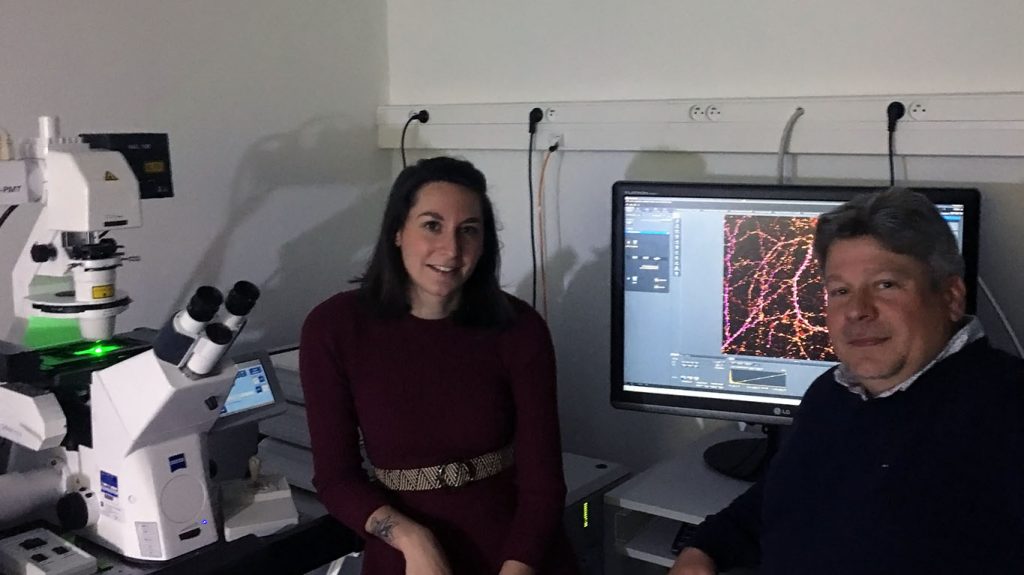
Exploring Drug Repurposing to Restore Hippocampal Function in FXS Mouse Models
This team found a key mechanism by which FMRP controls brain connections. They’ll test existing drugs that target this pathway to restore learning and memory in Fragile X.

Contribution of Microglia to the Therapeutic Effects of Metformin and Adiponectin in Fragile X Syndrome
Why are some with Fragile X always hungry or overweight, yet rarely diabetic? This team is studying metabolism and testing treatments like metformin and diet.

Promising Results of Preclinical Study of ANAVEX®2-73
Anavex Life Sciences announced today that preclinical data of the ANAVEX®2-73 (blarcamesine) study in Fragile X syndrome were published in the journal, Scientific Reports.

Synaptogenix Announced Intention to Launch a Fragile X Clinical Trial with Bryostatin
Bryostatin research has advanced from mouse models to human trials. Synaptogenix and Nemours make plans to test this potential treatment in Fragile X clinical trials.

Link Between Lipid Profile, eCBome System and Gut Microbiome in Fragile X Syndrome
Why does obesity challenge so many people with Fragile X? Dr. Caku’s team has found that Fragile X syndrome causes changes in the tiny organisms that live in our gut.

Characterization of Microglia Transcriptional Profile in Fmr1 Knockout Mice Model
Microglia are excessively activated in Fragile X models. The team will investigate the mechanisms and attempt to correct this using drugs.

The Role of Astrocyte BMP Signaling in Fragile X Syndrome
Researchers found a pathway in astrocytes that is overactive in Fragile X syndrome, and they hope to bring this pathway back to normal with a drug.

Pivotal Phase 3 Trial of Zygel in Severe Fragile X Possible This Year
Zynerba Pharmaceuticals received advice from the U.S. Food and Drug Administration (FDA) on the design of a Phase 3 clinical trial of Zygel as a cannabidiol treatment for Fragile X syndrome.

Pharmacotherapeutic Effects of Cannabidiol (CBD) in Fragile X syndrome (FXS) and Autism Spectrum disorder (ASD)
This study tested CBD (cannabidiol) treatment in male and female Fragile X mice to learn how and why it works and whether gender affects responses to CDB treatment.

Cellular-Specific Therapeutic Targeting of Inhibitory Circuits in Fragile X Syndrome
The team studied how inhibitory brain circuits malfunction in Fragile X and tested ways to restore balance by targeting mGluR and endocannabinoid signaling.

Auditory Dysfunction in Fragile X Syndrome in a Mouse Model of Fragile X
FRAXA-funded studies found Fragile X mice show altered auditory circuit function with delayed startle timing and reduced prepulse inhibition, mirroring human sound sensitivity.

Parkinson’s Therapy May Hold Promise for Fragile X
A study funded by FRAXA in Italy has encouraging results for people with Fragile X: drugs that block adenosine receptors (A2A) reversed signs of Fragile X in a mouse model.

Beneath the Surface of Fragile X Syndrome: Study Sheds Light on What’s Happening in Nerve Cells
Lynne Maquat discovered that many irregularities in cells that lack FMRP are due to misregulated nonsense-mediated mRNA decay, or NMD. Results published.
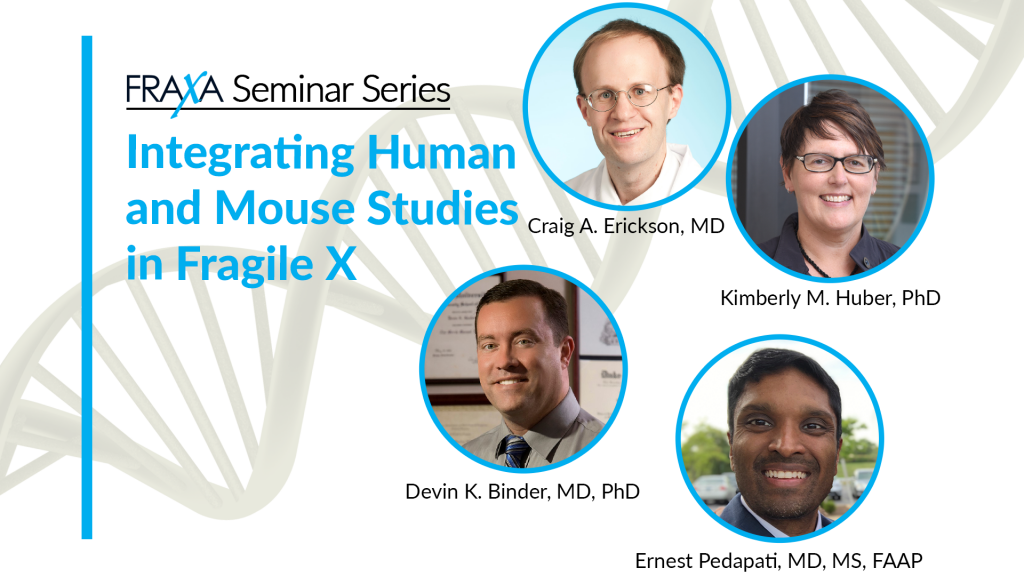
Integrating Human and Mouse Studies in Fragile X Syndrome – an NIH Center Approach
Presentations by Craig Erickson, Ernest Pedapati, Devin Binder, and Kimberly Huber about their research on Fragile X as part of their NIH Center of Excellence.
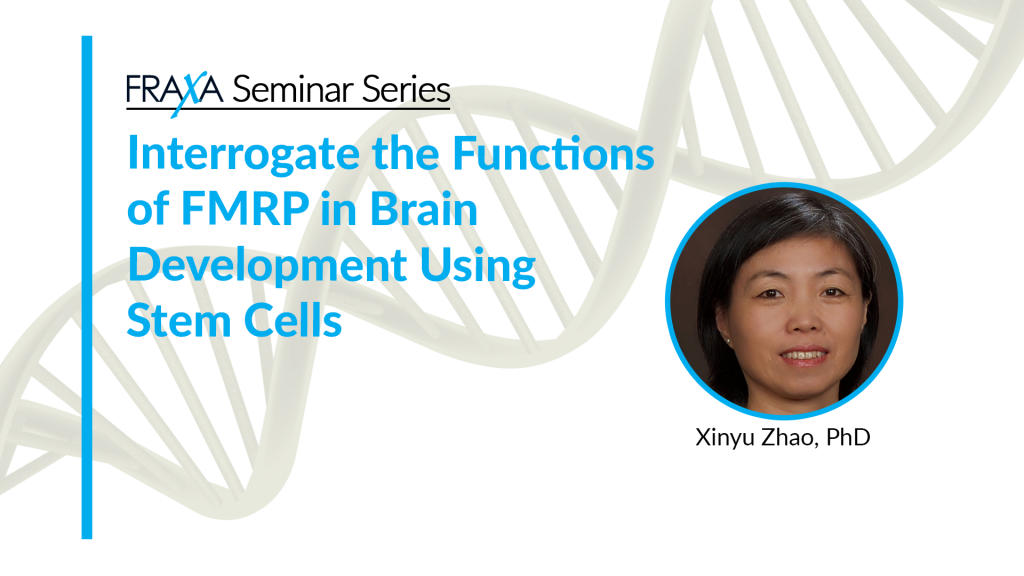
Interrogate the Functions of FMRP in Brain Development Using Stem Cells
Dr. Xinyu Zhao of the Waisman Center and Department of Neuroscience at University of Wisconsin-Madison joins us in this seminar to present Interrogate the Functions of FMRP in Brain Development Using Stem Cells.
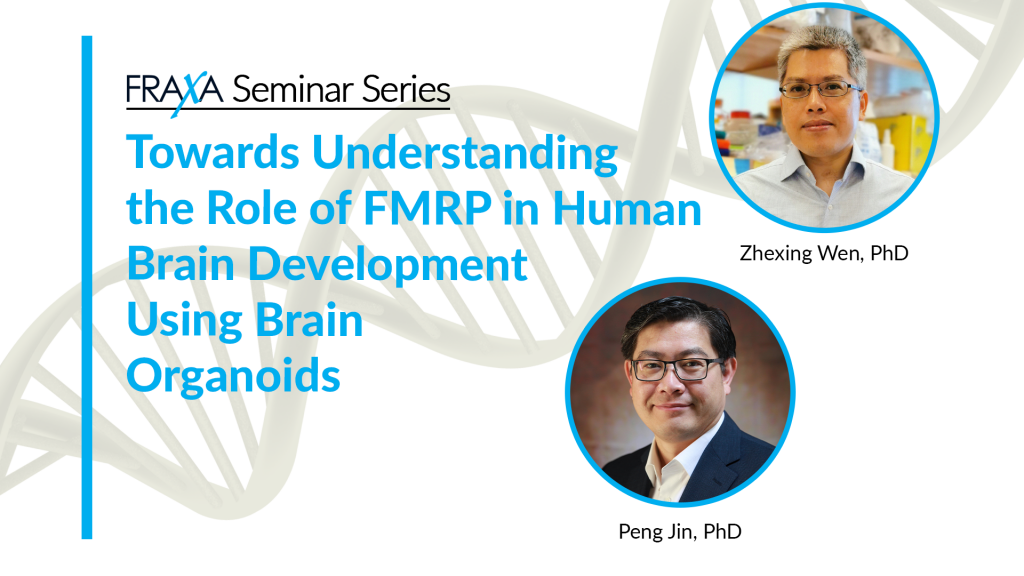
Towards Understanding the Role of FMRP in Human Brain Development Using Brain Organoids
Dr. Zhexing Wen and Dr. Peng Jin at Emory University School of Medicine join us in this seminar to present Understanding the Role of FMRP in Human Brain Development Using Brain Organoids.

Bryostatin-1 in Long-term Use Seen to Arrest Fragile X Symptoms in Mouse Model
Long-term, but not short-term, treatment with bryostatin-1 arrested some behavioral and cognitive symptoms in a mouse model of Fragile X.

Positive Results Reported in Phase II Fragile X Clinical Trial of PDE4D Inhibitor Zatolmilast from Tetra Therapeutics
Tetra Therapeutics announces the first unequivocally positive phase 2 clinical trial in Fragile X syndrome. The results do not depend on carving out a subset of patients or post hoc analysis.

Overcoming the Placebo Effect in Fragile X Clinical Trials
In a placebo-controlled clinical trial, some participants are given an experimental medication, while others are given a placebo. A strong placebo effect can obscure results.