
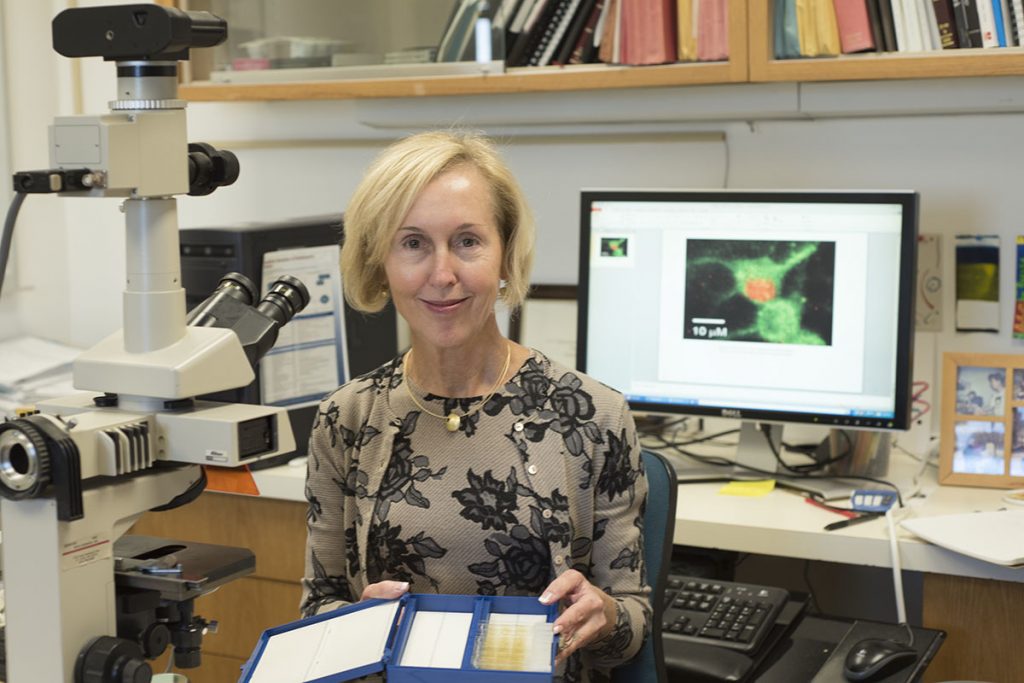
Defining Subcellular Specificity of Metabotropic Glutamate Receptor (mGluR5) Antagonists
This study showed that selectively targeting mGluR5 receptors in specific neuronal compartments can correct distinct Fragile X synaptic defects, improving precision therapy.

Investigating Gene Reactivation to Treat Fragile X Syndrome
With a $180,000 grant from FRAXA Research Foundation, Dr. Jeannie Lee and her team at Harvard are working to reactivate the gene that is silenced in Fragile X syndrome.

Mechanisms of Tolerance to Chronic mGluR5 Inhibition
FRAXA supported research showing mGluR5 antagonist tolerance develops quickly in Fragile X models, guiding new strategies to prevent or overcome it.
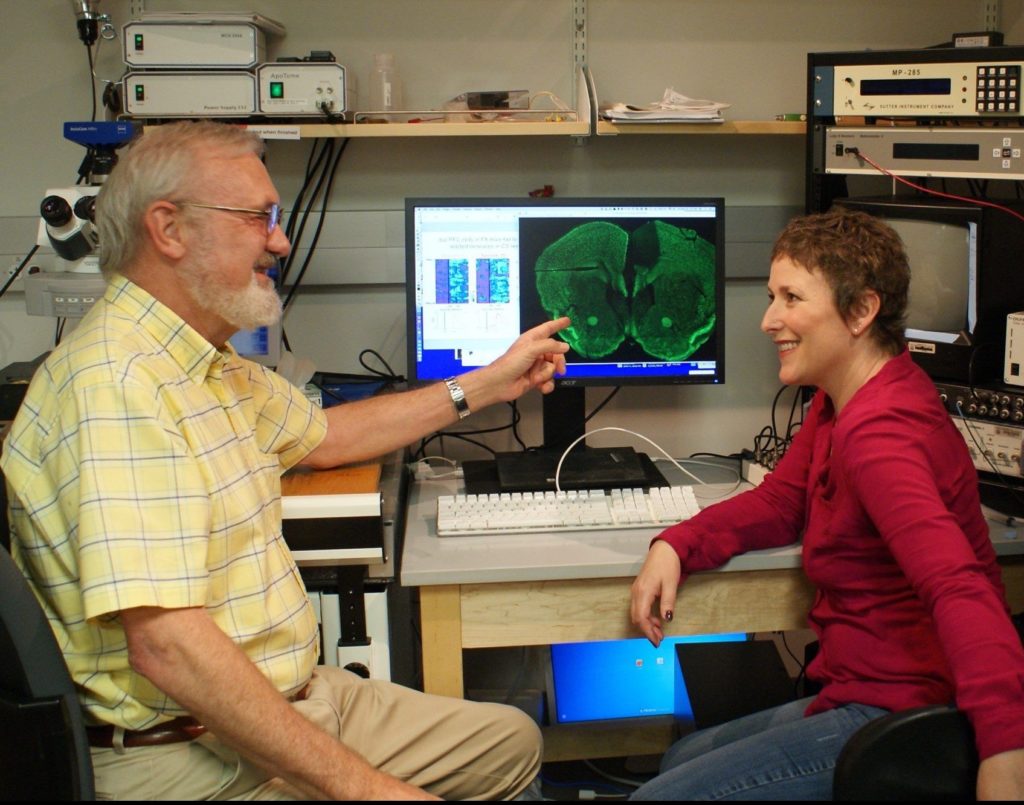
Prefrontal Cortex Network (PFC) Dynamics in Fragile X Syndrome
The team has shown that Fragile X mice have major prefrontal cortex deficits in Fragile X mice. Finding ways to overcome this could reveal new intervention strategies.
Prefrontal Cortex Network (PFC) Dynamics in Fragile X Syndrome
With a $90,000 grant from FRAXA Research Foundation from 2016-2017, Dr. Daniel Johnston and Dr. Jenni Siegel at the University of Texas at Austin are analyzing pre-frontal cortex (PFC) dysfunction in the Fragile X model. They have preliminary evidence that Fragile X mice are severely impaired in a prefrontal cortex (PFC)-dependent task.

$75,000 Raised for Fragile X Research by Friends of FRAXA at our Fall Fling
Over 150 friends joined FRAXA’s Fall Fling at Smith Barn, raising $75K for Fragile X research, including a $25K check hand-delivered!
Correcting Defects in Astrocyte Signaling in Fragile X Syndrome
Astrocytes, brain cells which support neurons, do not transmit signals. Fragile X treatment strategies have been proposed based on correction of “astrocyte phenotypes”.

Altered Neural Excitability and Chronic Anxiety in a Mouse Model of Fragile X
With a $35,000 grant from FRAXA, Dr. Peter Vanderklish at Scripps Research Institute, and colleagues, explored the basis of anxiety in Fragile X syndrome.
Development of a High-Content Synapse Assay to Screen Therapeutics for Fragile X Syndrome
This work established a high-content synaptic imaging platform for Fragile X cells to test many candidate drugs for their ability to repair synapse structure and function.

Clinical Trial of Ganaxolone in Patients with Fragile X Syndrome
Dr. Frank Kooy and colleagues conducted a double blind crossover trial of ganaxolone in patients with Fragile X with FRAXA funding. Results of this study were mixed.

FRAXA Wins Award for Drug Repurposing
Cures Within Reach has awarded FRAXA Research Foundation the 2017 Golan Christie Taglia Patient Impact Philanthropy Award for efforts to find treatments for Fragile X syndrome.

Genes and Gems Fundraiser raises $40,000 for Fragile X Research
Over 300 guests joined the Genes & Gems fundraiser in Columbus, raising funds for FRAXA and hearing from Dr. Craig Erickson of Cincinnati Children’s.

TD Bank invites Friends of FRAXA to Watch the Bruins
Fifty friends of FRAXA enjoyed a Bruins game at TD Garden, uniting Boston’s Fragile X community—thanks to TD Bank’s generous support!

Callum Cup 2017 Raised over $9200 for Fragile X Research
Millburn United’s Callum Cup raised $9K+ for FRAXA, honoring Callum Murphy. Huge thanks to Andrew Murphy, Nick Dawes & all donors!

PIKE as a Central Regulator of Synaptic Dysfunction in Fragile X Syndrome
With $255,000 from FRAXA Research Foundation, Dr. Suzanne Zukin at Albert Einstein College of Medicine studied signalling pathways in Fragile X syndrome.

The New York Times, “Medical Charities Once Advised on Coping With a Disease. Now They Try to Cure It”
Propelled by genome sequencing and social media, thousands of charities have sprung up to finance, coordinate and oversee research for cures. Katie Clapp and her son, Andy, who has Fragile X, a disease that causes intellectual disability, with a therapy horse at Gateway Farm in Merrimac, Mass. Ms. Clapp helped form a group that has spent millions on research for a cure.
Sensory Hypersensibility in Fragile X Syndrome and BK Channel Openers
With $366,100 in FRAXA funding, researchers tested BK channel–opening drugs to fix sensory abnormalities in Fragile X mice; early results showed broad behavioral rescue.

Fragile X Mutant Mouse Models
With $375,000 in grants from FRAXA, Dr. David Nelson developed an array of advanced mouse models of Fragile X. These models are available at Jackson Labs (JAX).

Repurposing Drugs to Dampen Hyperactive Nonsense-Mediated Decay in Fragile X Syndrome
FRAXA-funded research showed nonsense-mediated mRNA decay is overactive in Fragile X, pointing to existing NMD-suppressing drugs like caffeine as potential treatments.

Rolling Stone Magazine: Luke’s Best Chance: One Man’s Fight for His Autistic Son
Rolling Stone’s Paul Solotaroff shares his son Luke’s Fragile X journey, exploring what adulthood looks like for families like ours.

Fulcrum Therapeutics Launched with $55 Million to Reactivate the Fragile X Gene
Fulcrum Therapeutics in Cambridge, MA, aimed to develop small molecules to control gene expression. starting with with two diseases: Fragile X syndrome and a rare form of muscular dystrophy.
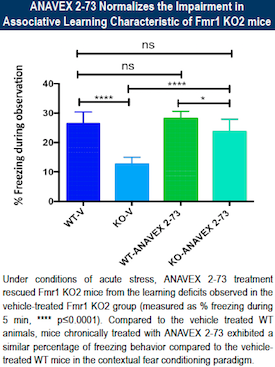
New compound from Anavex Improves Learning and Behavior in Fragile X Mice
The investigational drug Anavex 2-73 was able to improve intellectual, learning and hyperactivity measures in a mouse model of Fragile X syndrome. This is a sigma-1 receptor agonist.
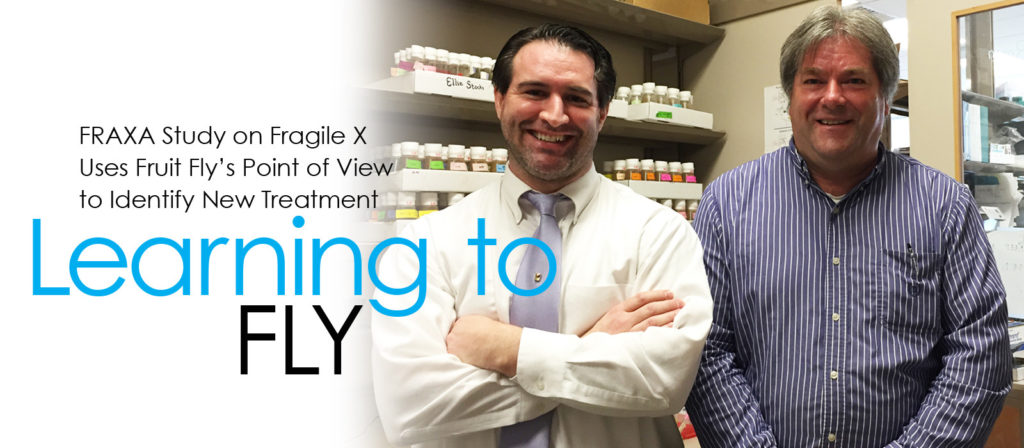
Fragile X Fruit Fly Research Bears Fruit
A FRAXA-funded study shows how the hormone insulin – usually associated with diabetes — is involved in daily activity patterns and learning deficits in the fruit fly model of Fragile X Syndrome.

Abnormalities of Synaptic Plasticity in the Fragile X Amygdala
With FRAXA funding, Dr. Sumantra Chattarji at NCBS explored how Fragile X alters amygdala function. Results were published.