

Holly Roos Joins the FRAXA Team!
We’re thrilled to welcome Holly Roos, longtime Fragile X advocate, as FRAXA’s new Community Services Director!

Brain & Life, “A Mom Leads Efforts to Cure Fragile X Syndrome for Her Son and Others”
We haven’t found a cure yet, but we’ve moved closer to understanding fragile X syndrome and identifying treatment targets. We hope this will help our son and other families dealing with this life-changing condition.

Tetra Releases Full Results of FRAXA-Funded Clinical Trial of PDE4D Inhibitor
Today, Tetra Therapeutics published the full results of its PDE4D trial. The data from this phase 2 clinical trial suggests the PDE4D drug can improve intellectual disability in Fragile X syndrome.
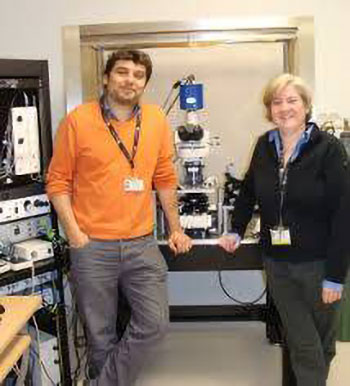
Cellular-Specific Therapeutic Targeting of Inhibitory Circuits in Fragile X Syndrome
The team studied how inhibitory brain circuits malfunction in Fragile X and tested ways to restore balance by targeting mGluR and endocannabinoid signaling.

FRAXA Supports Increased Funding for NICHD
FRAXA has joined the Friends of NICHD coalition, urging increased government funding for research into Fragile X and related conditions.

Auditory Dysfunction in Fragile X Syndrome in a Mouse Model of Fragile X
FRAXA-funded studies found Fragile X mice show altered auditory circuit function with delayed startle timing and reduced prepulse inhibition, mirroring human sound sensitivity.
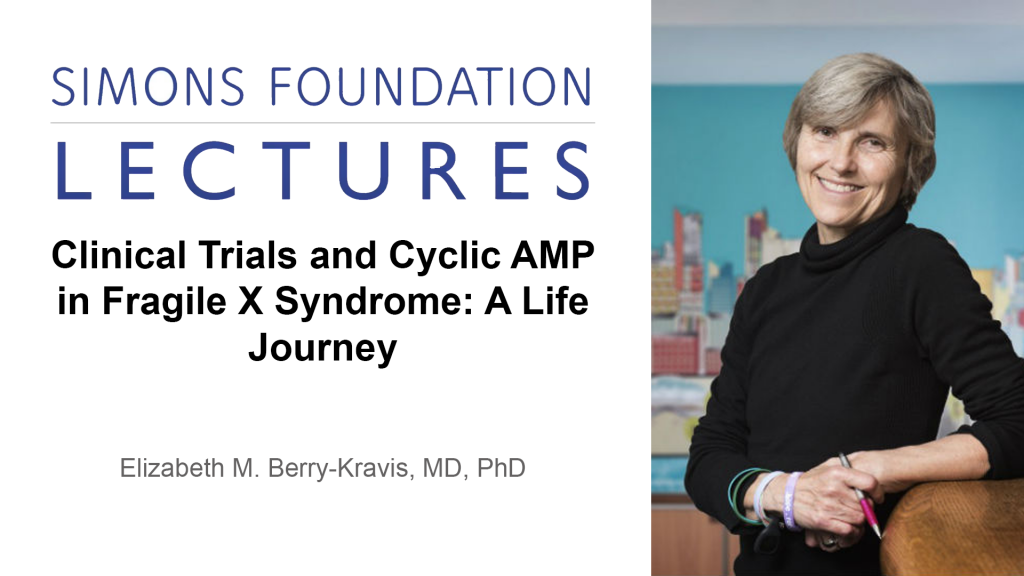
Clinical Trials and Cyclic AMP in Fragile X Syndrome: A Life Journey
In this Simons Foundation lecture, Elizabeth Berry-Kravis traces 30 years of Fragile X research, from identifying its cause through a series of disappointing clinical trials.

Educating Young Children with Fragile X Syndrome
We share strategies, tips, techniques, and stories to help teachers and therapists who are working with young children who have Fragile X syndrome.

Parkinson’s Therapy May Hold Promise for Fragile X
A study funded by FRAXA in Italy has encouraging results for people with Fragile X: drugs that block adenosine receptors (A2A) reversed signs of Fragile X in a mouse model.
The Why and How of FRAXA’s Work to Find a Cure for Fragile X
Thank you Talk Fragile X for having FRAXA’s cofounder Katie Clapp on your podcast! She shared our motivation for finding effective treatments and ultimately a cure for Fragile X.

Beneath the Surface of Fragile X Syndrome: Study Sheds Light on What’s Happening in Nerve Cells
Lynne Maquat discovered that many irregularities in cells that lack FMRP are due to misregulated nonsense-mediated mRNA decay, or NMD. Results published.

COVID-19 Vaccines Pose Little Risk to Rare Disease Patients, FDA, CDC Say
COVID-19 vaccines recently approved worldwide are expected to pose little risk to the rare disease community, including Fragile X patients.
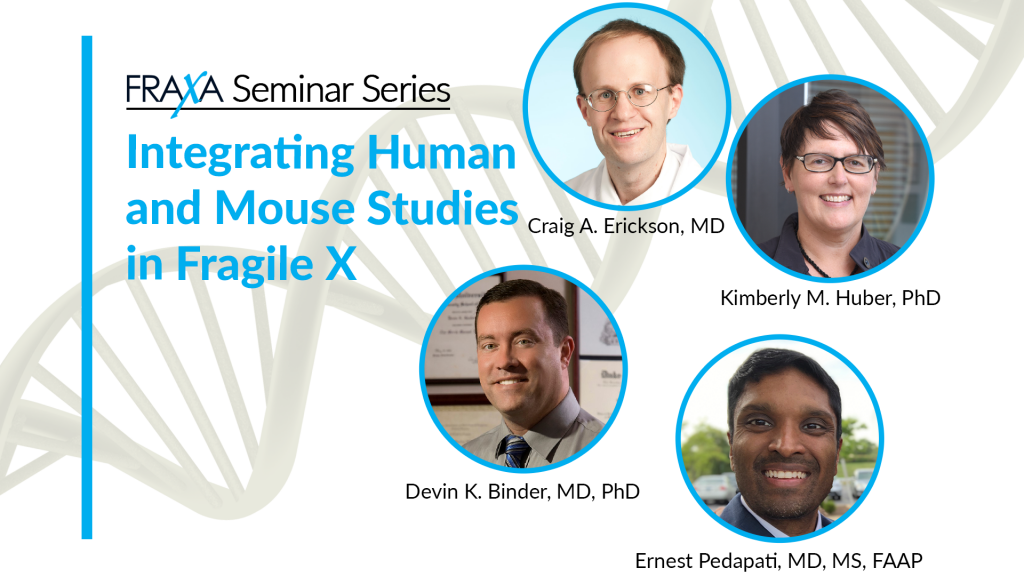
Integrating Human and Mouse Studies in Fragile X Syndrome – an NIH Center Approach
Presentations by Craig Erickson, Ernest Pedapati, Devin Binder, and Kimberly Huber about their research on Fragile X as part of their NIH Center of Excellence.

Developing Arbaclofen for Fragile X – Dr. Mark Bear 1:1 with FRAXA
MIT professor Dr. Mark Bear founded Allos Pharma to develop arbaclofen (STX209) as a treatment for Fragile X syndrome. Dr. Bear sat down with FRAXA co-founder Katie Clapp to share the story and next steps.
Interrogate the Functions of FMRP in Brain Development Using Stem Cells
Dr. Xinyu Zhao of the Waisman Center and Department of Neuroscience at University of Wisconsin-Madison joins us in this seminar to present Interrogate the Functions of FMRP in Brain Development Using Stem Cells.
Towards Understanding the Role of FMRP in Human Brain Development Using Brain Organoids
Dr. Zhexing Wen and Dr. Peng Jin at Emory University School of Medicine join us in this seminar to present Understanding the Role of FMRP in Human Brain Development Using Brain Organoids.

Sincere Gratitude for a Successful #GivingTuesday 2020
From the bottom of our hearts—thank you! With 150+ donors, FRAXA raised $70,047 on #GivingTuesday. Your support brings hope to Fragile X families.

Bryostatin-1 in Long-term Use Seen to Arrest Fragile X Symptoms in Mouse Model
Long-term, but not short-term, treatment with bryostatin-1 arrested some behavioral and cognitive symptoms in a mouse model of Fragile X.

Allos Pharma Revives Arbaclofen After 7 Years: New Hope for Fragile X Syndrome
Allos Pharma Inc launches a new development program for arbaclofen to treat Fragile X syndrome. This experimental drug missed its primary endpoint in clinical trials.

Positive Results Reported in Phase II Fragile X Clinical Trial of PDE4D Inhibitor Zatolmilast from Tetra Therapeutics
Tetra Therapeutics announces the first unequivocally positive phase 2 clinical trial in Fragile X syndrome. The results do not depend on carving out a subset of patients or post hoc analysis.

Overcoming the Placebo Effect in Fragile X Clinical Trials
In a placebo-controlled clinical trial, some participants are given an experimental medication, while others are given a placebo. A strong placebo effect can obscure results.

Zygel May Improve Behavior in Children With Severe Fragile X, Trial Data Suggest
Zynerba presented clinical trial results for Zygel at a recent neurology conference. Zygel, an experimental cannabidiol (CBD) gel, may reduce behavioral abnormalities in children with Fragile X syndrome who have more severe disease.
Use of EEG as a Biomarker for Diagnosis and Outcomes in Neurodevelopmental Disorders
This webinar features Charles A. Nelson III, PhD, Professor at Harvard Medical School and Carol Wilkinson, MD, PhD, Instructor at Boston Children’s Hospital.

Centers for Collaborative Research in Fragile X Receive $25 Million Over Next 5 Years
NIH announced $25 million to fund three new Centers for Collaborative Research in Fragile X, supported by NICHD, NIMH, and NINDS.