

Abnormalities of Synaptic Plasticity in the Fragile X Amygdala
With FRAXA funding, Dr. Sumantra Chattarji at NCBS explored how Fragile X alters amygdala function. Results were published.
Resources for Families: Fragile X – A to Z and Medication Guide
FRAXA welcomed intern Emily Fluet from the University of St. Andrews, who transformed our Fragile X A–Z and Medication Guide into online resources!

Targeting AMP-Activated Protein Kinase Pathway in Fragile X Syndrome
With this grant from FRAXA, Dr. Peter Vanderklish explored AMPK activators to treat Fragile X. Both metformin and resveratrol, found in red wine, are AMPK activators.
Fruit Flies to Model and Test Fragile X Treatments
Boosting cAMP signaling restores memory and fixes brain-signaling defects in Fragile X models, suggesting diabetes drugs like metformin may help.
Analysis of Developmental Brain Dysfunction in Families
No strong behavioral similarities were found between parents and children with Fragile X, indicating family history may not guide clinical trial recruitment.

Crossroads of Fragile X and Alzheimers Research
Last week researchers at VIB Leuven in Belgium published evidence that a brain pathway involving the protein APP (Amyloid Precursor Protein) plays a vital role in development of Fragile X syndrome, one of the most common causes of autism. Scientists led by Dr. Emanuela Pasciuto in the laboratory of Prof Claudia Bagni published findings of their study in the journal Neuron.
Fragile X Treatment: New Research Directions
In the wake of negative results from several high-profile clinical trials in Fragile X, we find ourselves questioning many of our previous assumptions about the nature of this disorder. After all, understanding the basic pathology of disease is critical to development of new treatments — this is true across the board, in all branches of medicine.

Fragile X Programs at UMASS – University of MA, Worcester
Fragile X Syndrome Behavioral Health Clinic The Center for Autism and Neurodevelopmental Disorders (CANDO) is opening a specialty clinic for individuals with Fragile X Syndrome (under the direction of Dr. Jean Frazier) to evaluate and provide treatment for behavioral challenges.

Inhibitors of STEP as a Novel Treatment of Fragile X Syndrome
STEP inhibition reversed behavioral and synaptic Fragile X deficits in mice (Neuropharmacology, 2018), highlighting STEP as a promising treatment target.

Molecular Mechanisms of Cytoskeletal Regulation by FMRP
With FRAXA funding, Dr. Jaffrey linked FMR1 loss to abnormal dendritic spines via RhoA signaling, suggesting RhoA-targeted therapies could help treat Fragile X.
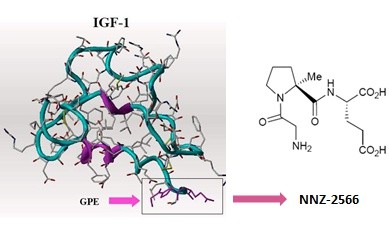
Neuren’s NNZ-2566 Shows Clinical Benefit in Rett Syndrome Trial
This isn’t a Fragile X trial, but the Neuren compound, NNZ-2566, that is in trials now for Fragile X has shown significant positive effects in a Phase 2 trial for Rett syndrome. The results of the trial are interesting, in that improvement was seen a Rett syndrome-specific rating scale compared to placebo, and there was also improvement noted on the CGI-I (Clinical Global Impression of Improvement) and Caregiver Top 3 Concerns. However, there was no effect seen on ABC scores (Aberrant Behavior Checklist) compared to placebo. Many in the Fragile X field have noted the inadequacies of the ABC; indeed, it was never designed or intended to be an outcome measure for clinical trials.

Clinical Trials Outcome Measures
There is a critical need for reliable biomarkers and clinical outcome measures for Fragile X syndrome. Treatment trials depend on this.

Why Did Fragile X Clinical Trials of mGluR Antagonists Fail?
by Michael Tranfaglia, MD. In my opinion, the Fragile X clinical trials of AFQ056 sponsored by Novartis failed because of a dose range that was inadequate for Fragile X, and because of the unexpected development of tolerance.
Fragile X Clinical Trial: Novartis Trial Results Are In, and They’re Not Pretty
This year’s Gordon Conference just finished, and Novartis presented their results for the first time (though advisors and advocates had been given a private peak months ago.) To say that the trial results for AFQ056 were disappointing would be the understatement of the century!
Novartis Discontinues Development of mavoglurant (AFQ056) for Fragile X Syndrome
Mavoglurant trials in Fragile X did not show improvement vs. placebo, leading Novartis to end the program and wind down the open-label extension.

Social Behavior as an Outcome Measure for Fragile X Clinical Trials
FRAXA funding helped identify reliable social behavior tests in Fragile X mice and showed an mGluR5 treatment could improve sociability, guiding future trials.

Glycogen Synthase Kinase-3 (GSK3), Lithium and Fragile X
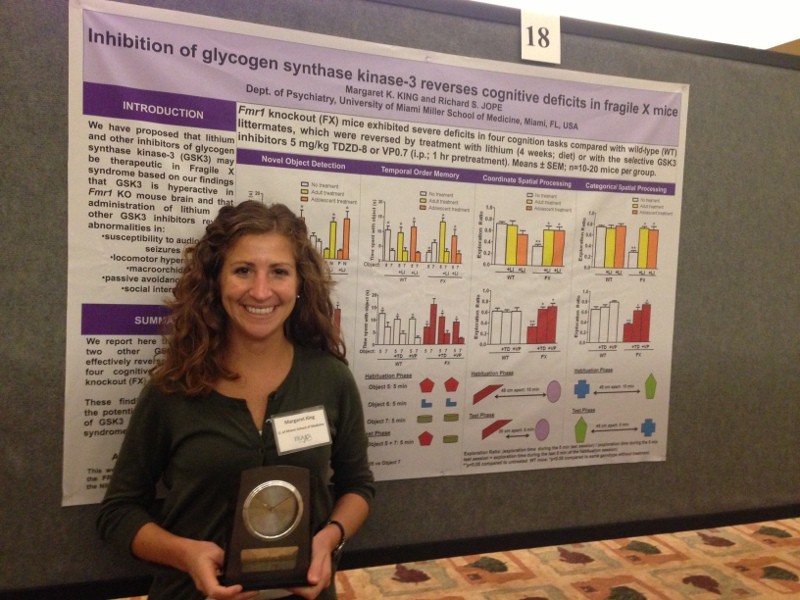
Dr. Jope found that lithium (at usual therapeutic doses) and investigational GSK3 inhibitors can reverse a number of cognitive deficits in FMR1 knockout mice.

Development of a Novel GABA-A Agonist in Fragile X Syndrome
FRAXA funded analysis of a selective GABA-A drug for Fragile X, leading to a clinical trial at Cincinnati Children’s to test this potential treatment.

The mTOR Pathway in Fragile X Syndrome
FRAXA-funded research showed that blocking S6K1 in Fragile X mice improves social, behavioral, and physical symptoms.

Matrix Metalloproteinase Therapeutic Treatments for Fragile X Syndrome
Dr. Broadie showed that MMP enzymes disrupt synapse development in Fragile X. MMP inhibitors (e.g. minocycline) improved connectivity and behavior in fruit flies.

Treatment of Fragile X Syndrome via Dopamine Enhancers and Glutamate Inhibitors
In Fragile X mice, low dopamine signaling and excessive glutamate activity were targeted with dual therapy: dopamine enhancers plus glutamate inhibitors.

Effects of minocycline on vocal production and auditory processing in a mouse model of Fragile X
With FRAXA funding, Dr. Khaleel Razak and Dr. Iryna Ethell explored robust biomarkers relevant to the FXS and the efficacy of minocycline treatment.

Endocannabinoid Mediated Synaptic Plasticity in Fragile X Mice
FRAXA-funded studies found faulty endocannabinoid signaling in Fragile X brain circuits for reward and emotion, and boosting 2-AG restored normal function.

Small Rho GTPases, a Potential Therapeutic Target for Fragile X Syndrome
Dr. MariVi Tejada from the University of Houston tested several potential therapeutic compounds in an attempt to rescue function in the mouse model of Fragile X.