

Link Between Lipid Profile, eCBome System and Gut Microbiome in Fragile X Syndrome
Why does obesity challenge so many people with Fragile X? Dr. Caku’s team has found that Fragile X syndrome causes changes in the tiny organisms that live in our gut.

Characterization of Microglia Transcriptional Profile in Fmr1 Knockout Mice Model
Microglia are excessively activated in Fragile X models. The team will investigate the mechanisms and attempt to correct this using drugs.

The Role of Astrocyte BMP Signaling in Fragile X Syndrome
Researchers found a pathway in astrocytes that is overactive in Fragile X syndrome, and they hope to bring this pathway back to normal with a drug.

Identifying Cellular and Molecular Signatures in Human Neurons That Distinguish Fragile X Syndrome Patients with Divergent EEG Profiles
Just as Fragile X affects individuals differently, medications do as well. This project aims to bring personalized medicine to Fragile X syndrome.
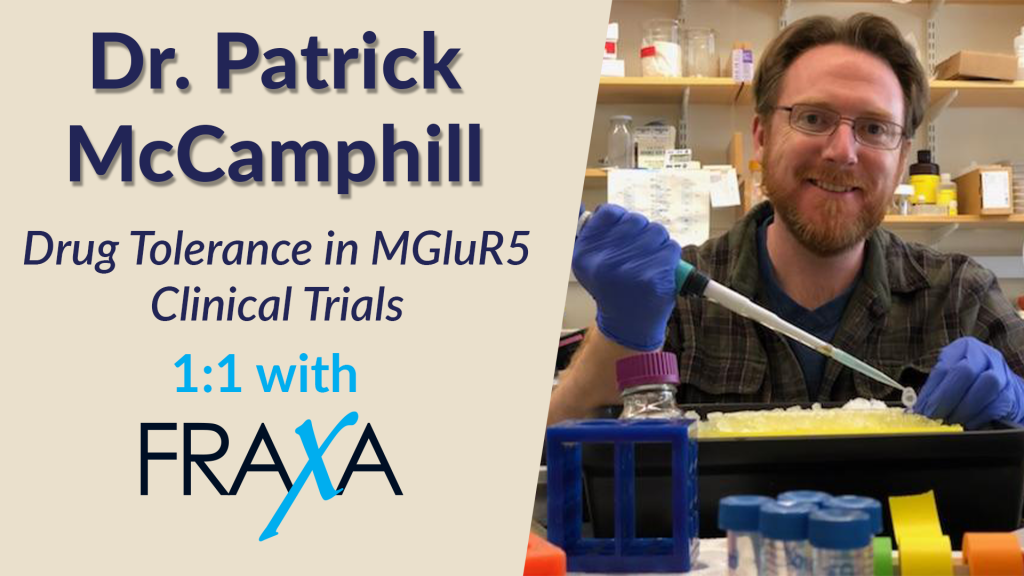
Drug Tolerance in MGluR5 Clinical Trials – Dr Patrick McCamphill 1:1 with FRAXA
We suspected that clinical trials of mGluR5 blockers from Novartis and Roche failed because the drug triggered tolerance. Dr. Patrick does find tolerance, and is looking for ways to overcome it.

Pharmacotherapeutic Effects of Cannabidiol (CBD) in Fragile X syndrome (FXS) and Autism Spectrum disorder (ASD)
This study tested CBD (cannabidiol) treatment in male and female Fragile X mice to learn how and why it works and whether gender affects responses to CDB treatment.
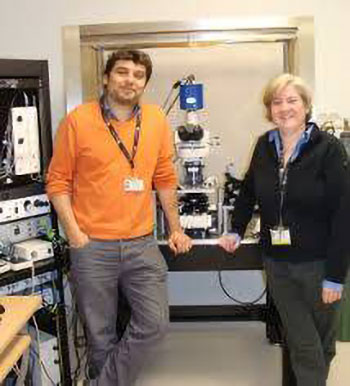
Cellular-Specific Therapeutic Targeting of Inhibitory Circuits in Fragile X Syndrome
The team studied how inhibitory brain circuits malfunction in Fragile X and tested ways to restore balance by targeting mGluR and endocannabinoid signaling.

Auditory Dysfunction in Fragile X Syndrome in a Mouse Model of Fragile X
FRAXA-funded studies found Fragile X mice show altered auditory circuit function with delayed startle timing and reduced prepulse inhibition, mirroring human sound sensitivity.
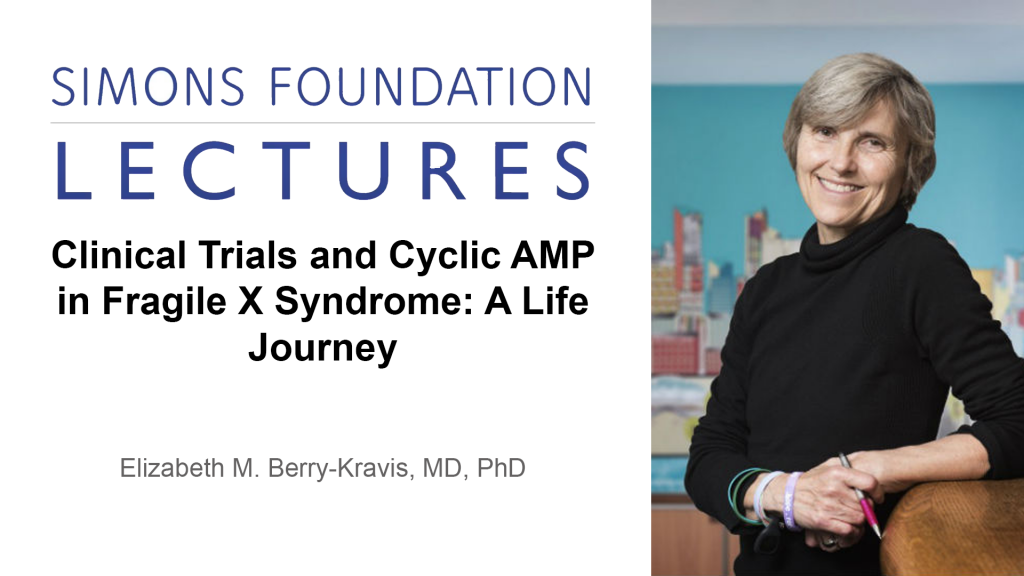
Clinical Trials and Cyclic AMP in Fragile X Syndrome: A Life Journey
In this Simons Foundation lecture, Elizabeth Berry-Kravis traces 30 years of Fragile X research, from identifying its cause through a series of disappointing clinical trials.

Parkinson’s Therapy May Hold Promise for Fragile X
A study funded by FRAXA in Italy has encouraging results for people with Fragile X: drugs that block adenosine receptors (A2A) reversed signs of Fragile X in a mouse model.

Beneath the Surface of Fragile X Syndrome: Study Sheds Light on What’s Happening in Nerve Cells
Lynne Maquat discovered that many irregularities in cells that lack FMRP are due to misregulated nonsense-mediated mRNA decay, or NMD. Results published.
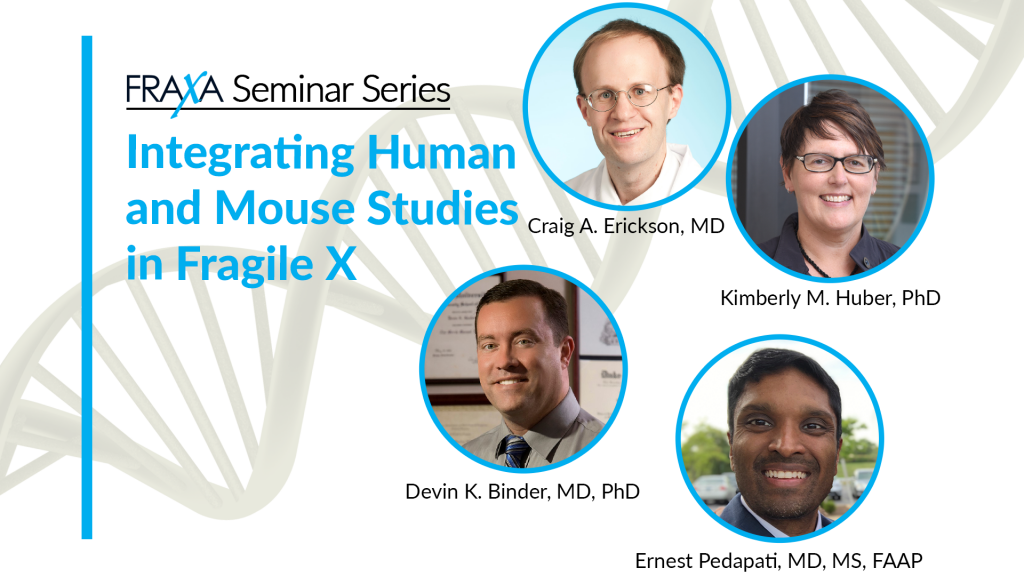
Integrating Human and Mouse Studies in Fragile X Syndrome – an NIH Center Approach
Presentations by Craig Erickson, Ernest Pedapati, Devin Binder, and Kimberly Huber about their research on Fragile X as part of their NIH Center of Excellence.

Developing Arbaclofen for Fragile X – Dr. Mark Bear 1:1 with FRAXA
MIT professor Dr. Mark Bear founded Allos Pharma to develop arbaclofen (STX209) as a treatment for Fragile X syndrome. Dr. Bear sat down with FRAXA co-founder Katie Clapp to share the story and next steps.
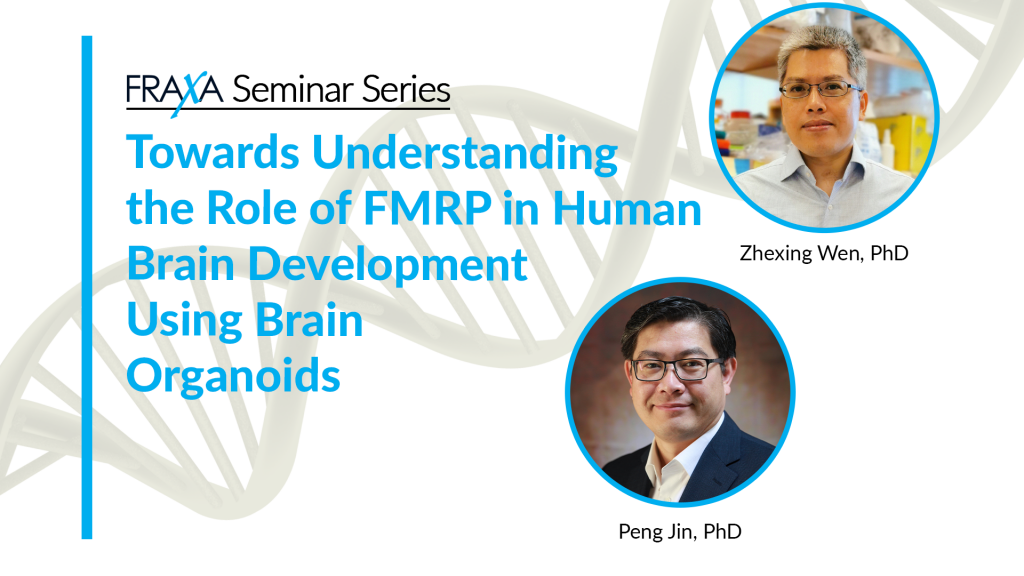
Towards Understanding the Role of FMRP in Human Brain Development Using Brain Organoids
Dr. Zhexing Wen and Dr. Peng Jin at Emory University School of Medicine join us in this seminar to present Understanding the Role of FMRP in Human Brain Development Using Brain Organoids.
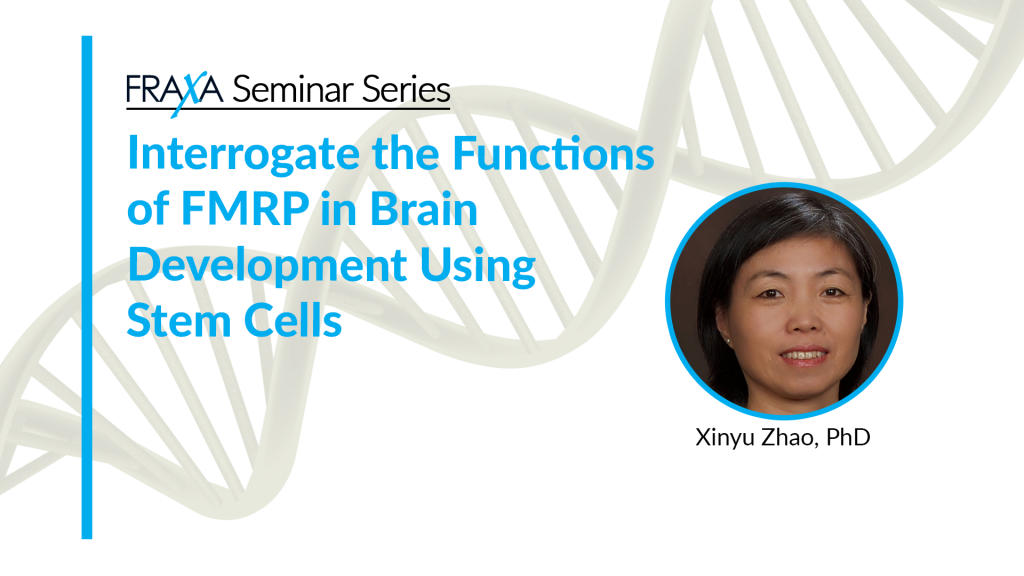
Interrogate the Functions of FMRP in Brain Development Using Stem Cells
Dr. Xinyu Zhao of the Waisman Center and Department of Neuroscience at University of Wisconsin-Madison joins us in this seminar to present Interrogate the Functions of FMRP in Brain Development Using Stem Cells.

Allos Pharma Revives Arbaclofen After 7 Years: New Hope for Fragile X Syndrome
Allos Pharma Inc launches a new development program for arbaclofen to treat Fragile X syndrome. This experimental drug missed its primary endpoint in clinical trials.

Positive Results Reported in Phase II Fragile X Clinical Trial of PDE4D Inhibitor Zatolmilast from Tetra Therapeutics
Tetra Therapeutics announces the first unequivocally positive phase 2 clinical trial in Fragile X syndrome. The results do not depend on carving out a subset of patients or post hoc analysis.
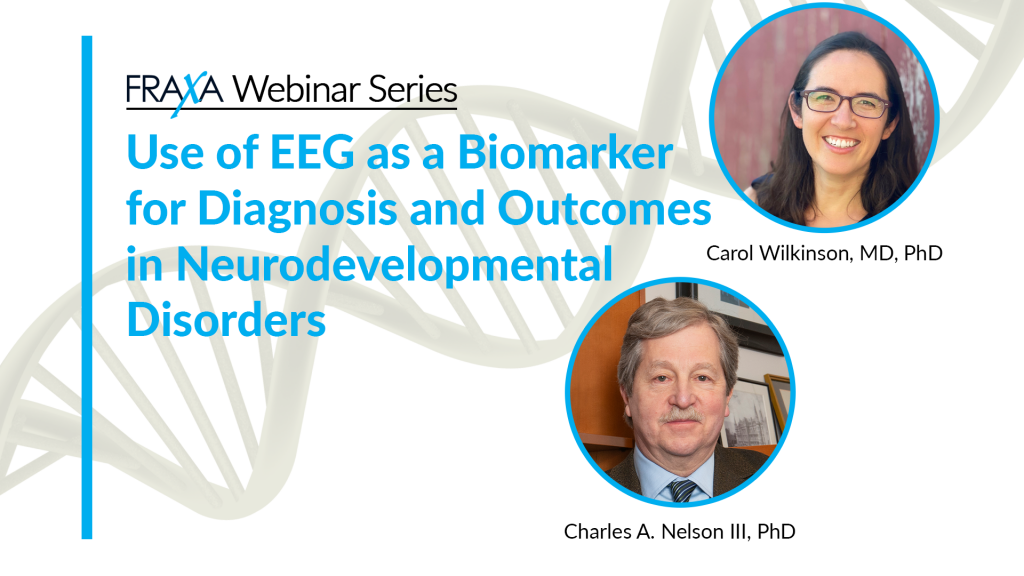
Use of EEG as a Biomarker for Diagnosis and Outcomes in Neurodevelopmental Disorders
This webinar features Charles A. Nelson III, PhD, Professor at Harvard Medical School and Carol Wilkinson, MD, PhD, Instructor at Boston Children’s Hospital.
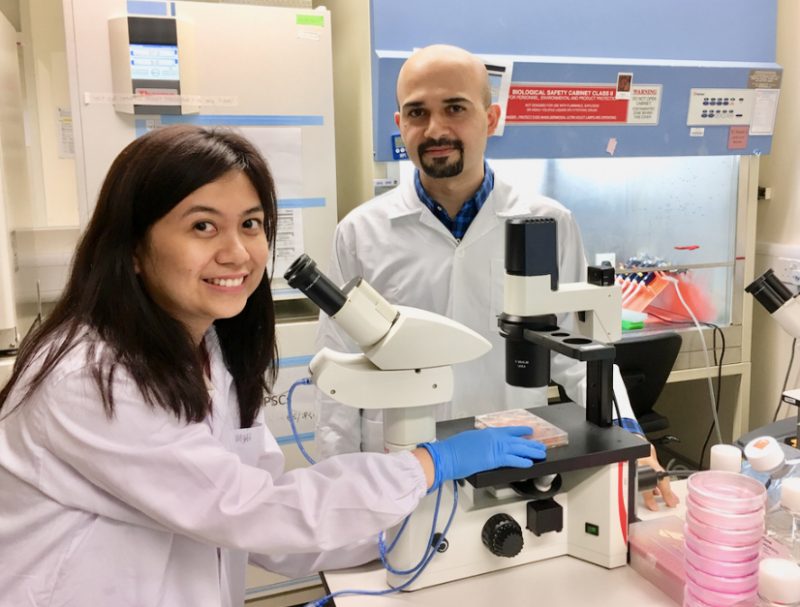
Genome-wide Screen for FMR1 Reactivation in Human FXS Neural Cells
This team aims to turn the FMR1 gene back on in Fragile X by identifying factors that reactivate the silenced gene and restore production of the missing FMRP protein.

Yale Researcher Dr. Elizabeth Jonas 1:1 with FRAXA
We talk with Dr. Elizabeth Jonas at Yale School of Medicine about her new research suggesting that leaky mitochondria which may be involved in Parkinson’s and Fragile X syndrome.

MicroRNAs as Biomarkers in Fragile X Syndrome
The team at Johns Hopkins University studied groups of small RNAs, known as microRNAs, which are greatly decreased in brain tissue of Fragile X mice vs. normal controls.
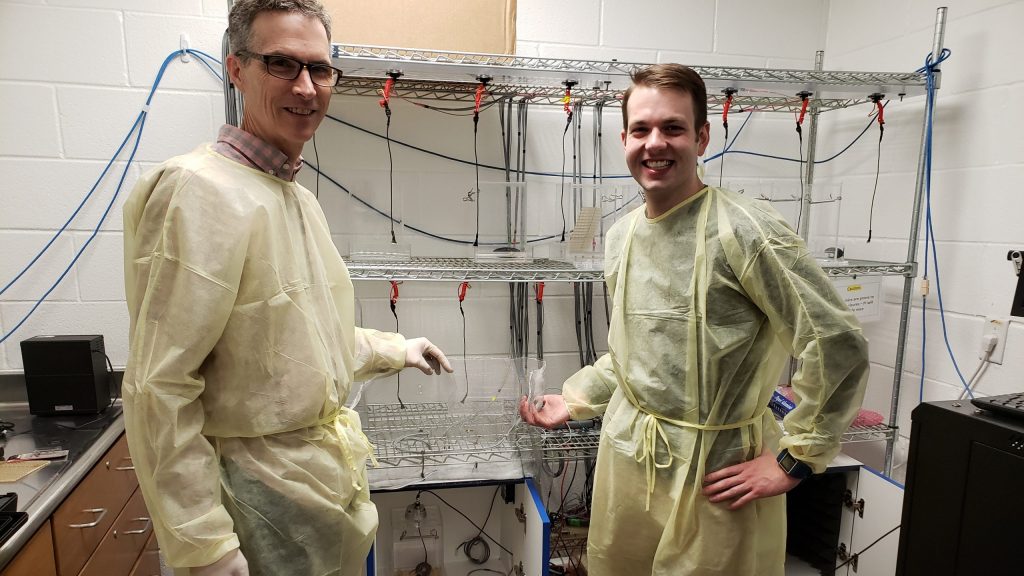
Auditory System Dysfunction and Drug Tolerance in the Fragile X Mouse
A $90K FRAXA grant will help uncover why Fragile X causes sound hypersensitivity and test ways to correct brain circuit dysfunction linked to auditory overload.

MicroRNA Mediated Astroglial GLT1 Dysregulation in Fragile X
The team studied how glial cells, especially astrocytes, affect Fragile X. They tested microRNAs to restore GLT1 and reduce excess glutamate linked to brain hyperexcitability.
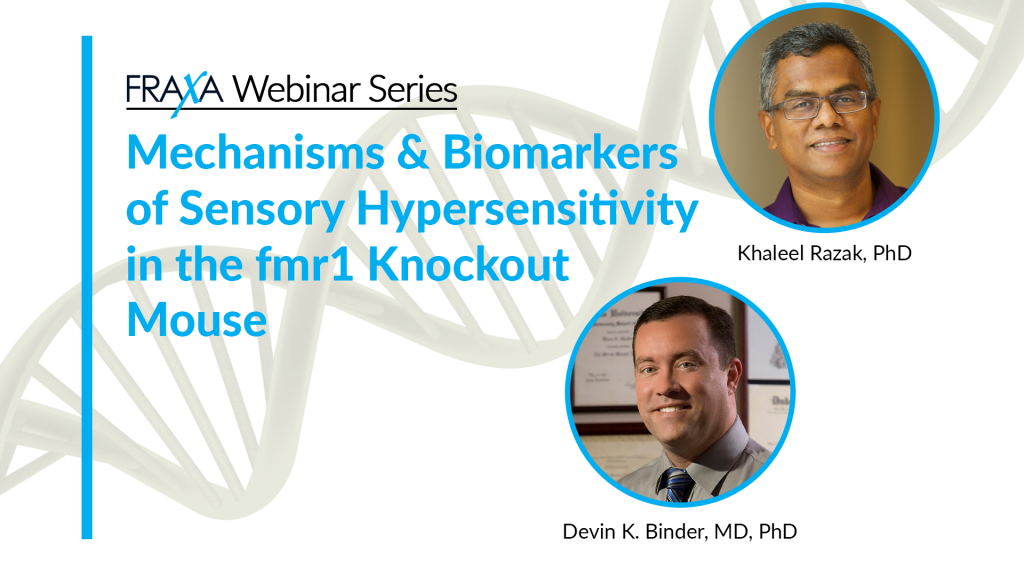
Mechanisms and Biomarkers of Sensory Hypersensitivity in the fmr1 Knockout Mouse
We hear from Devin K. Binder, MD, PhD, Professor, University of California at Riverside Medical School and Khaleel Razak, PhD, Professor, University of California at Riverside.