
Nospharma Announces Partnership with FRAXA to Test NOS-01 in Pre-Clinical Models of Fragile X
NOS-01 enters the FRAXA Drug Validation Initiative (FRAXA-DVI) for Fragile X mouse-model testing, generating data to guide development decisions.

Callum Cup IX Brings Community Together, Raising $20,000 for Fragile X Research
Callum Cup IX brought the Millburn FC community together, raising $20,000 for the FRAXA Research Foundation in support of Fragile X research.
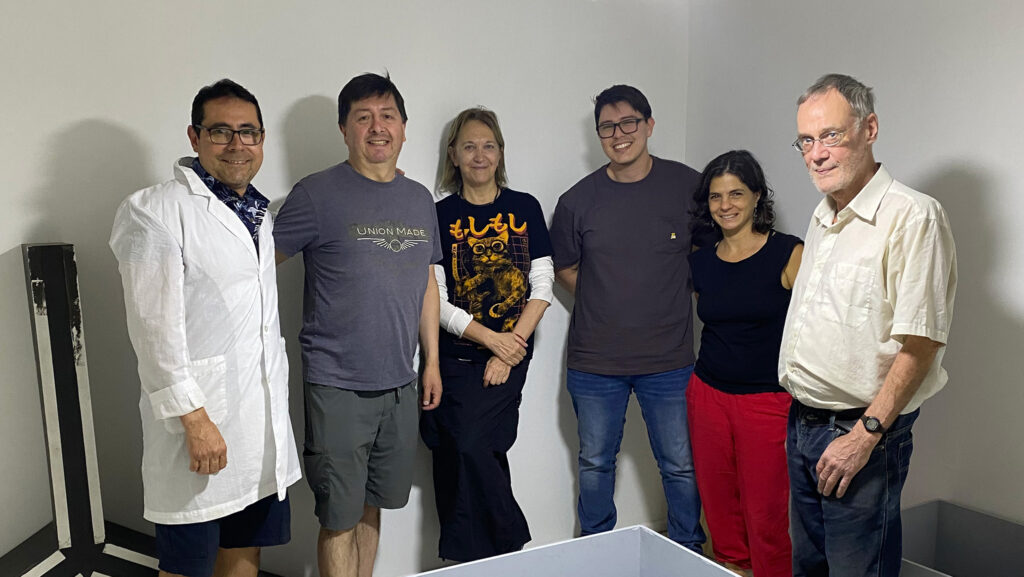
FRAXA Drug Validation Initiative (FRAXA-DVI)
The FRAXA Drug Validation Initiative (FRAXA-DVI) provides speedy, cost-effective, objective preclinical testing to validate investigational and repurposed compounds for Fragile X.
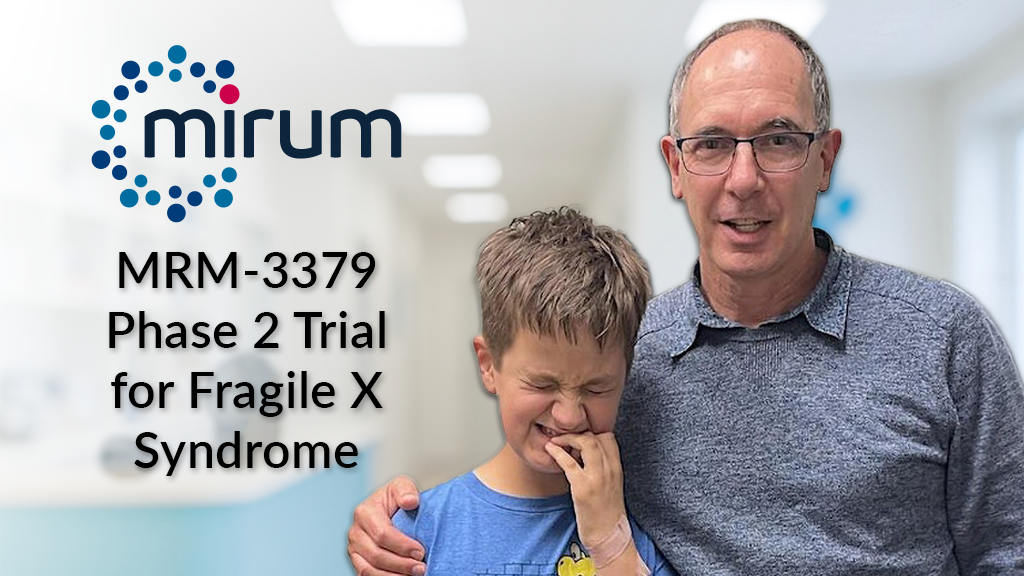
Recruiting: Mirum Launches Clinical Trial of MRM-3379 for Fragile X Syndrome
Mirum’s MRM-3379 Phase 2 trial builds on FRAXA-funded PDE4D research and is now enrolling males ages 13–45 with Fragile X syndrome. View eligibility and study sites.
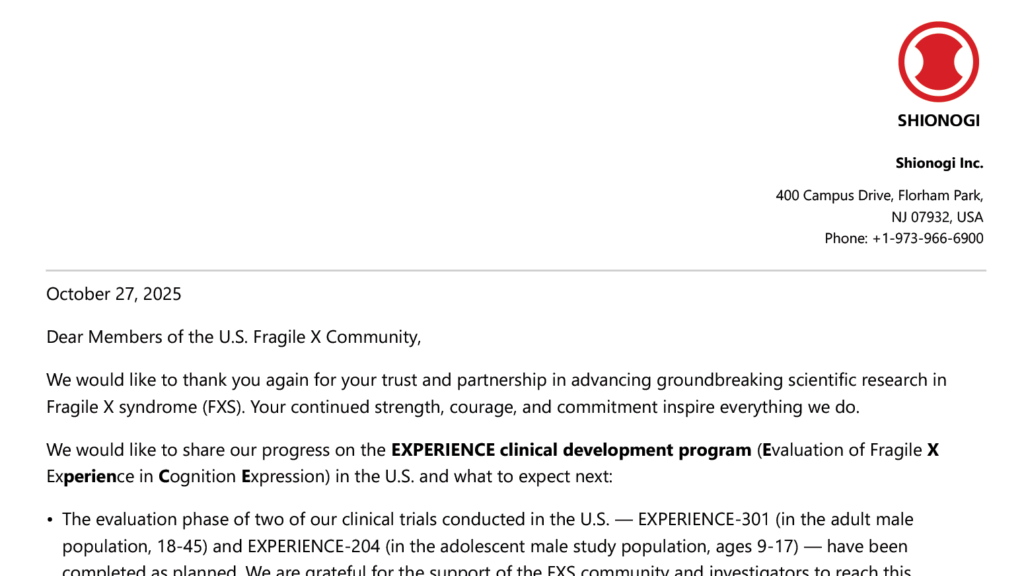
Shionogi Shares Update on Zatolmilast Fragile X Clinical Trials
Shionogi shares an update on its zatolmilast Fragile X clinical trials, outlining progress in U.S. studies and next steps in data analysis and evaluation.
Fragile X Research Q&A: Dr. Berry-Kravis on the RECONNECT Trial
Fragile X Research Q&A with Dr. Berry-Kravis on RECONNECT results, placebo effects, outcome measures, methylation, and research directions for families.

RECONNECT Trial Results: ZYN002 Does Not Meet Primary Endpoint in Fragile X
Harmony Biosciences announced that the Phase 3 RECONNECT trial of ZYN002 in Fragile X syndrome failed to meet its primary endpoint.
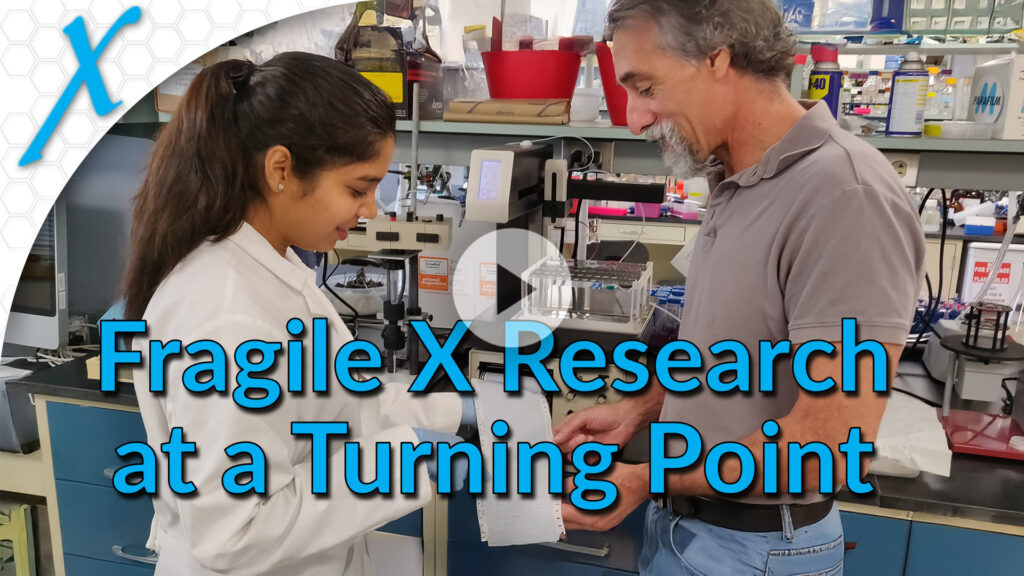
Fragile X Research Update: A Turning Point for Treatments and Curative Approaches
Fragile X research is at a turning point. FRAXA is funding ASO therapy and CRISPR-based gene reactivation to target the root cause of Fragile X.
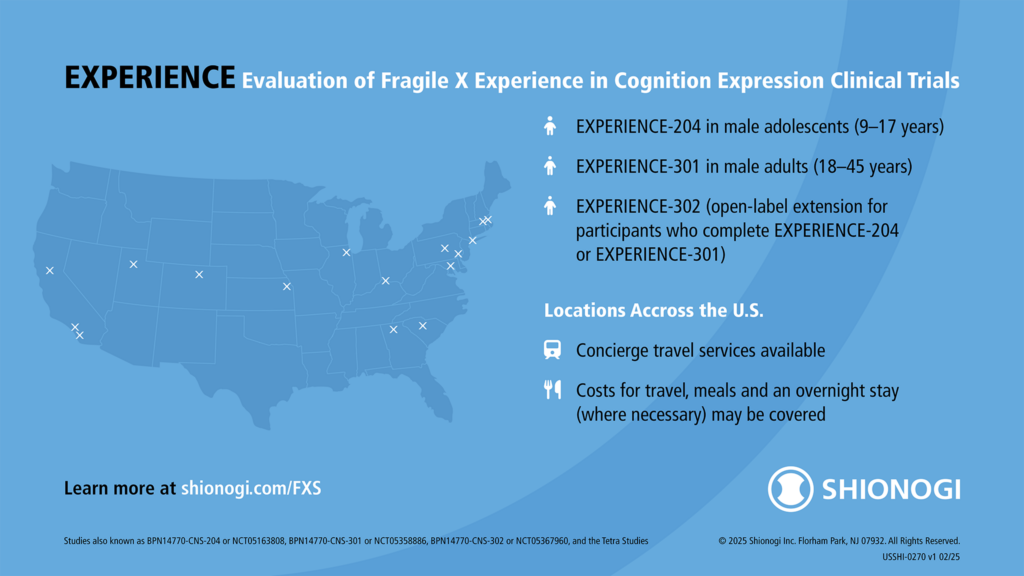
Shionogi’s EXPERIENCE Phase 3 Clinical Trial of Zatolmilast in Fragile X Syndrome
Learn more about Shionogi’s EXPERIENCE clinical trials for adults and adolescents with Fragile X syndrome, FRAXA’s role, and the open-label extension of these trials.

Callum Cup VIII Scores $19,400 for Fragile X Research – A Milestone Event
Callum Cup VIII, Millburn FC’s annual charity match, scored big with $19,400 raised for Fragile X research, bringing total funds to $148,000!

NPR Spotlights Zatolmilast: A Potential Breakthrough for Fragile X Syndrome
NPR spotlights zatolmilast, a promising investigational drug to treat Fragile X syndrome. Families report life-changing improvements in learning and independence.

Coming Together for Rare Disease Day 2023
Today we mark Rare Disease Day. FRAXA is committed to advancing research on Fragile X, one of the most common rare diseases worldwide.

Fragile X Clinical Trial of New PDE4D Inhibitor from Tetra
A $200K FRAXA grant enabled a successful Phase 2 trial of a PDE4D inhibitor for adult men with Fragile X, showing strong cognitive gains without side effects or tolerance.

Tetra’s Fragile X Clinical Trial – The Most Successful So Far
Dr. Mark Gurney of Tetra Therapeutics, discusses how one of the earliest clues to the biology of Fragile X led to the most successful Fragile X clinical trial to date: a phase 2 trial of a PDE4D inhibitor.

Tetra Releases Full Results of FRAXA-Funded Clinical Trial of PDE4D Inhibitor
Today, Tetra Therapeutics published the full results of its PDE4D trial. The data from this phase 2 clinical trial suggests the PDE4D drug can improve intellectual disability in Fragile X syndrome.
Clinical Trials and Cyclic AMP in Fragile X Syndrome: A Life Journey
In this Simons Foundation lecture, Elizabeth Berry-Kravis traces 30 years of Fragile X research, from identifying its cause through a series of disappointing clinical trials.

Positive Results Reported in Phase II Fragile X Clinical Trial of PDE4D Inhibitor Zatolmilast from Tetra Therapeutics
Tetra Therapeutics announces the first unequivocally positive phase 2 clinical trial in Fragile X syndrome. The results do not depend on carving out a subset of patients or post hoc analysis.

Companies Move to Advance Potential Cognitive Treatment for Fragile X
Tetra Therapeutics and Shionogi announced plans to expand their partnership supporting BPN14770, a treatment candidate for disorders marked by cognitive and memory deficits.

Tetra Announces $40M to Advance BPN14770 for FXS and Alzheimer’s Disease
Tetra Discovery Partners has signed a multi-part deal that could bring it up to $160 million, plus royalties, from Shionogi & Co, Ltd, a Japanese major research-driven pharmaceutical company. Tetra currently is conducting an investigational Phase 2 study of BPN14770 in adults with Fragile X Syndrome, an indication for which BPN14770 has received Orphan Drug Designation from the US Food and Drug Administration. This clinical trial was made possible by early work with the FRAXA-DVI and over $200,000 from FRAXA.
Research Points to Drugs which Inhibit PDE to Treat Fragile X
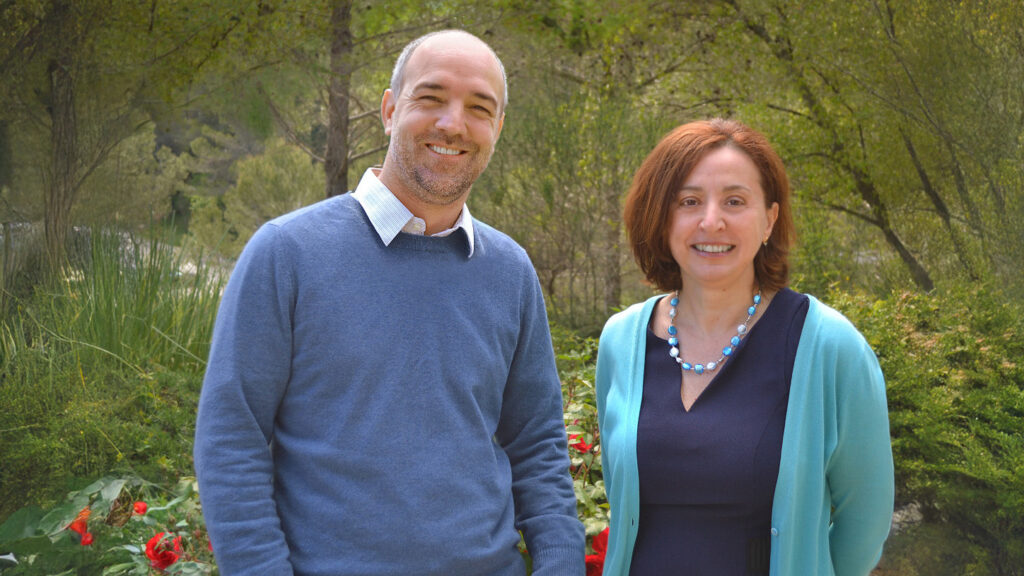
FRAXA-funded work identified PDE enzymes as key targets in Fragile X, showing that PDE inhibitors can fix signaling and boost synaptic function. PDE4D trials are underway.
Combinatorial Drug Treatment in a Model of Fragile X Syndrome using Novel Biomarkers
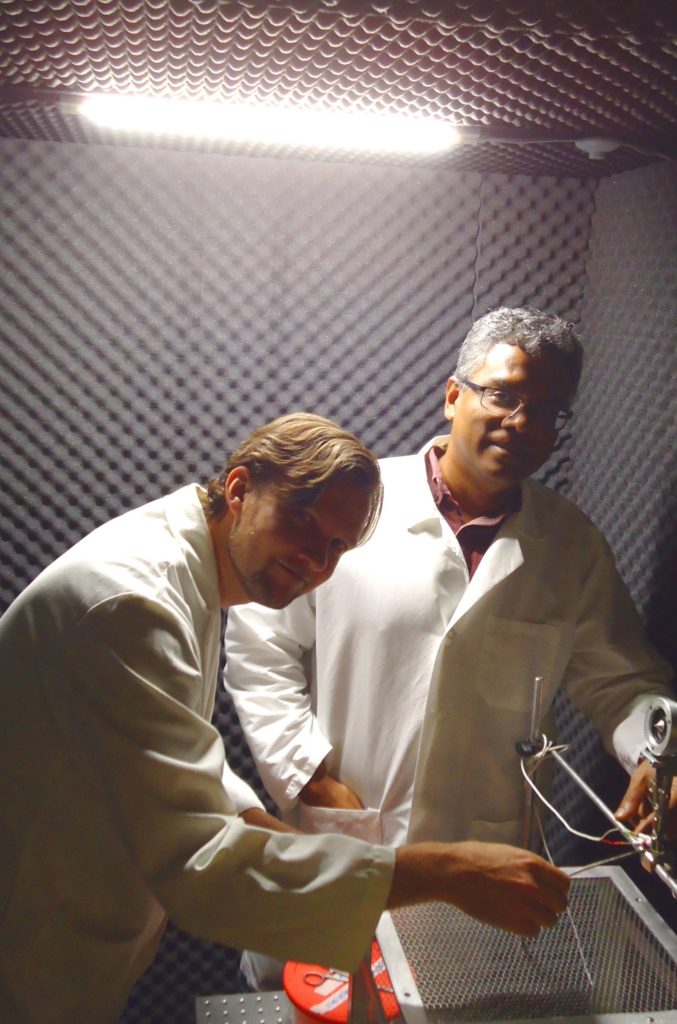
University of California researchers Khaleel Razak, PhD, and Jonathan W. Lovelace, PhD, explored drug combinations to limit hypersensitivity to sounds in Fragile X mice.

Encouraging Results from First Trial of Minocycline in Fragile X
A clinical trial of minocycline in children with Fragile X found significantly better global improvement vs. placebo, supporting its safety and potential.
Role of Matrix Metalloproteinases (MMP-9) in Fragile X
With a $220,000 FRAXA grant, Dr. Iryna Ethell’s team at UC Riverside uncovered MMP-9’s role in Fragile X—leading to a major treatment strategy using minocycline.