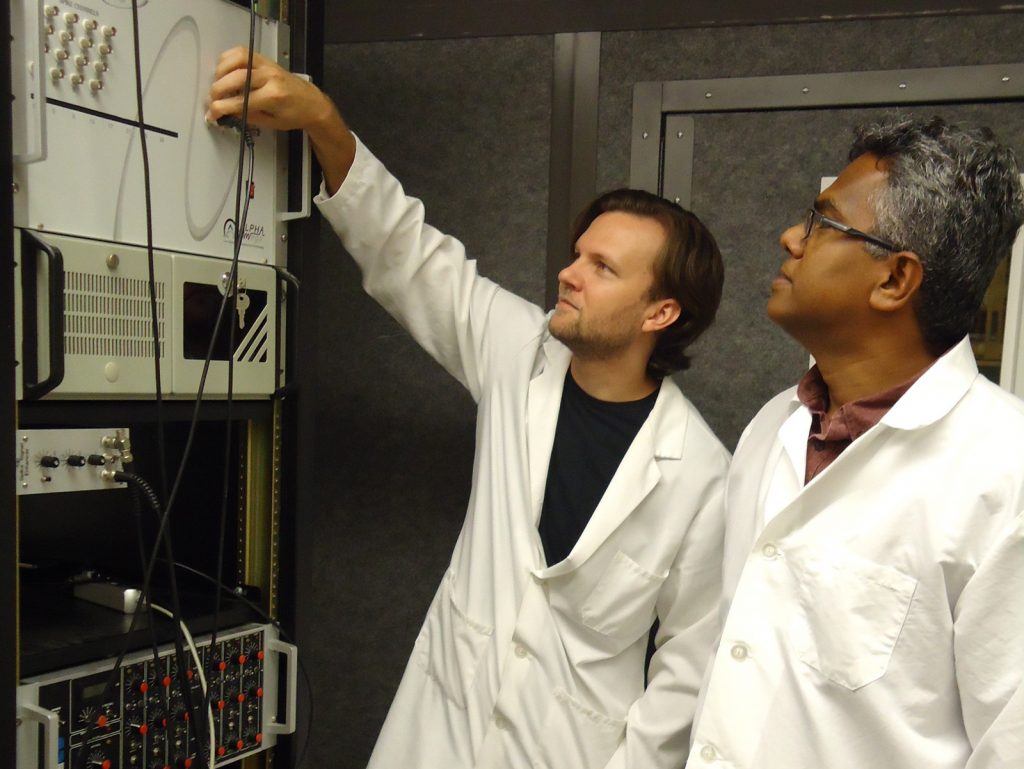
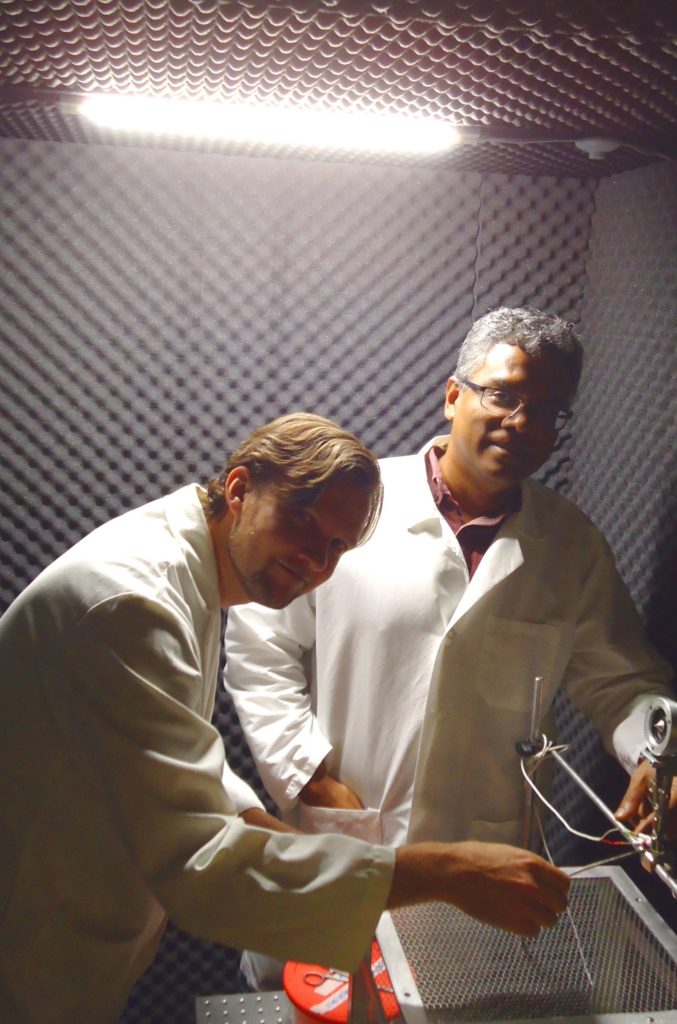
A $90K FRAXA grant will help uncover why Fragile X causes sound hypersensitivity and test ways to correct brain circuit dysfunction linked to auditory overload.
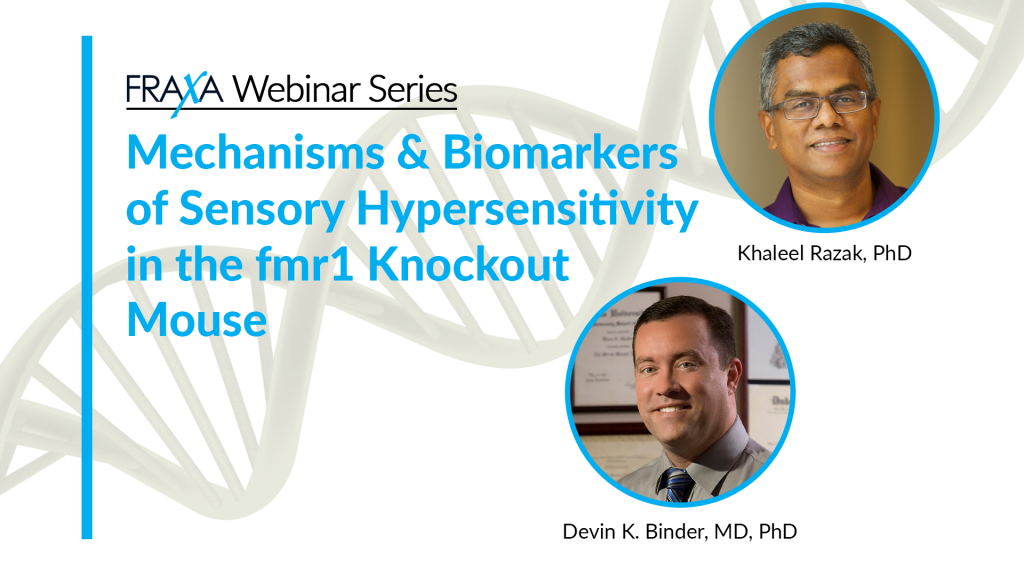
We hear from Devin K. Binder, MD, PhD, Professor, University of California at Riverside Medical School and Khaleel Razak, PhD, Professor, University of California at Riverside.
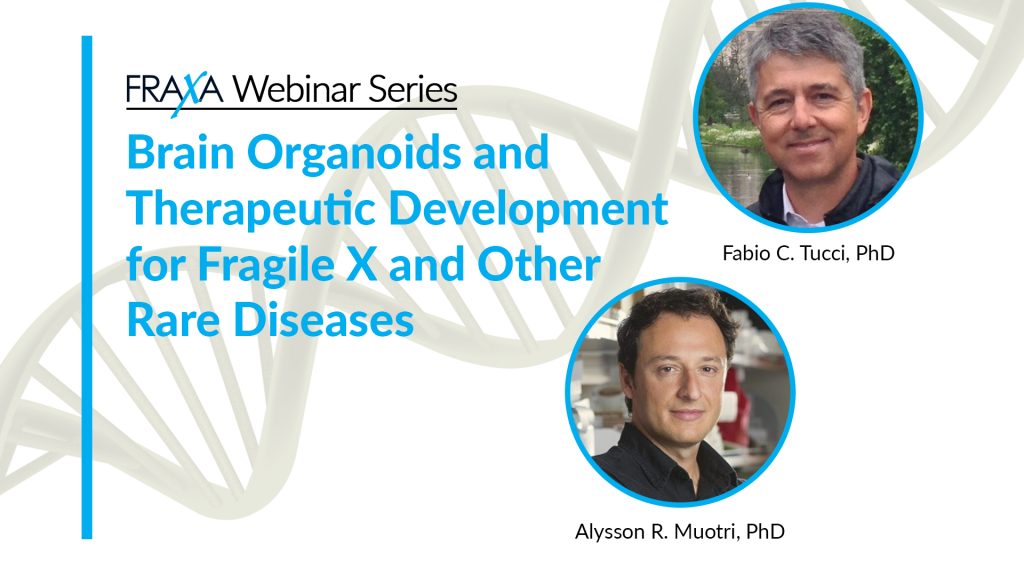
In this webinar we hear from Alysson R. Muotri, PhD, Professor at University of California San Diego Stem Cell Program and Fabio C. Tucci, PhD, CEO and co-founder at Epigen Biosciences.
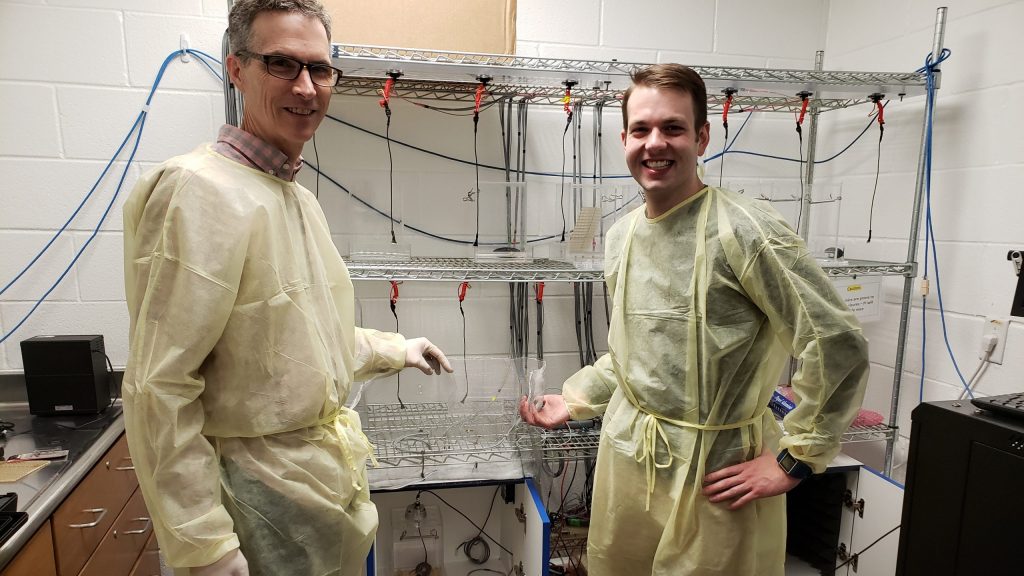
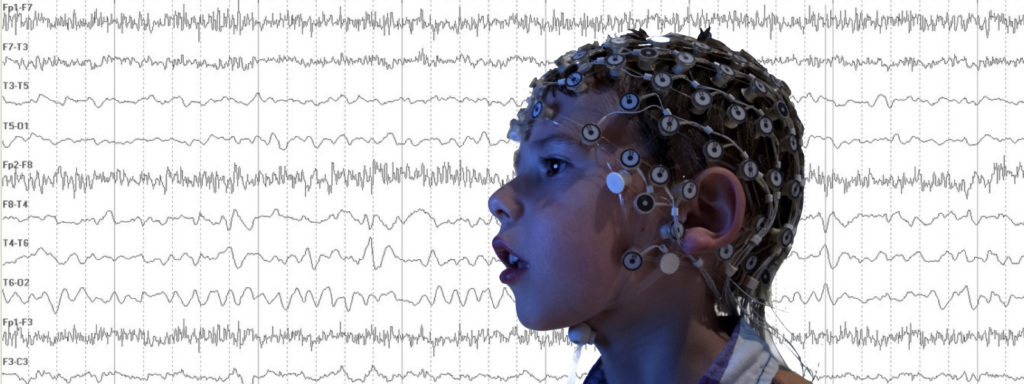
Jonathan Lovelace, a FRAXA funded Postdoc at UC Riverside, has made some exciting EEG findings over the past few years studying auditory hypersensitivity in mice and therapeutic drug treatments. A big obstacle in FXS research has been establishing reliable, unbiased, and translation relevant biomarkers that can be used to determine the effectiveness of therapies. One of the most important discoveries they have made is the striking similarity in EEG biomarkers between mice and humans.
A Fragile X clinical trial of a new PDE4D allosteric inhibitor from Tetra Therapeutics is nearly complete. Right now there are 3 remaining spots open to males 18-45 years of age with Fragile X syndrome. Dr. Elizabeth Berry-Kravis at the Rush University Medical Center in Chicago is leading this trial. The drug being studied has a unique mechanism of action that might improve cognitive and memory function.
With FRAXA funding, researchers tested AAV gene therapy to restore FMRP in Fragile X mice, measuring safety, effectiveness, and brain activity to inform future trials.
FRAXA funded a study using blood-based transcriptomics to find reliable Fragile X biomarkers. This unique approach links molecular data to behavior for future trials.
This FRAXA grant studied why people with Fragile X are overly sensitive to sound and tested drug strategies to calm the brain’s overactive auditory circuits.
Dr. Erickson’s trial targeted brain imbalance in Fragile X by boosting GABA signaling with AZD7325, aiming to restore excitatory–inhibitory balance and improve symptoms.
University of California researchers Khaleel Razak, PhD, and Jonathan W. Lovelace, PhD, explored drug combinations to limit hypersensitivity to sounds in Fragile X mice.
Once the neural marker is identified for a particular challenge, such as kids with poor language versus good language, neural markers can be measured during drug and behavioral therapy trials to see if a child is improving based on objective biological measures.
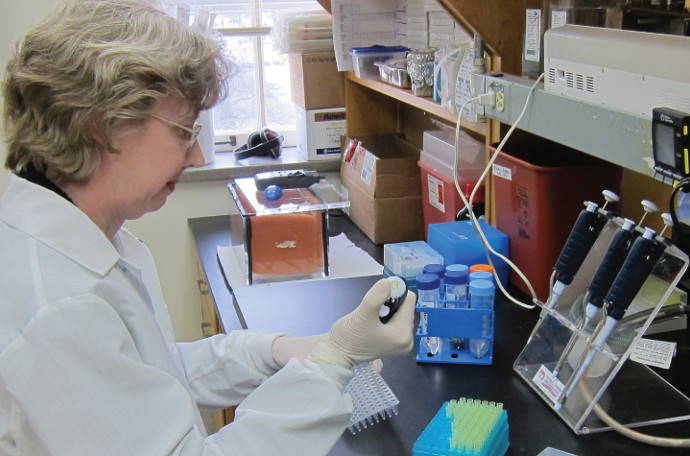
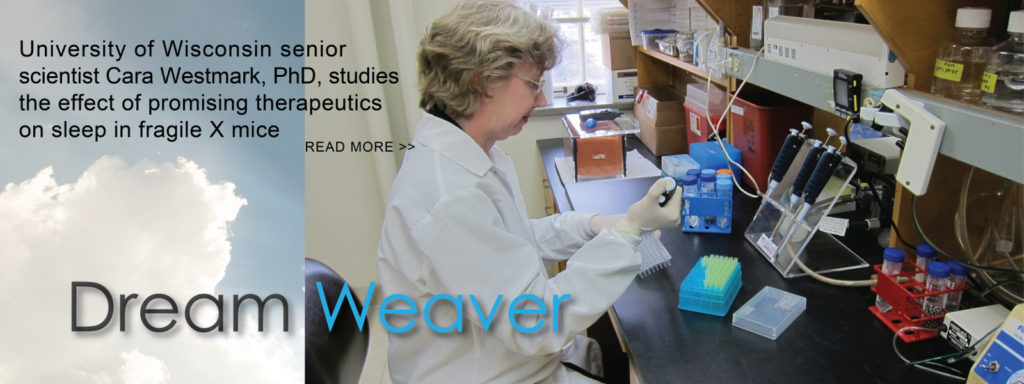
FRAXA Research Foundation awarded $122,000 to Dr. Cara Westmark at the University of Wisconsin at Madison for studies of sleep disorders in Fragile X syndrome.
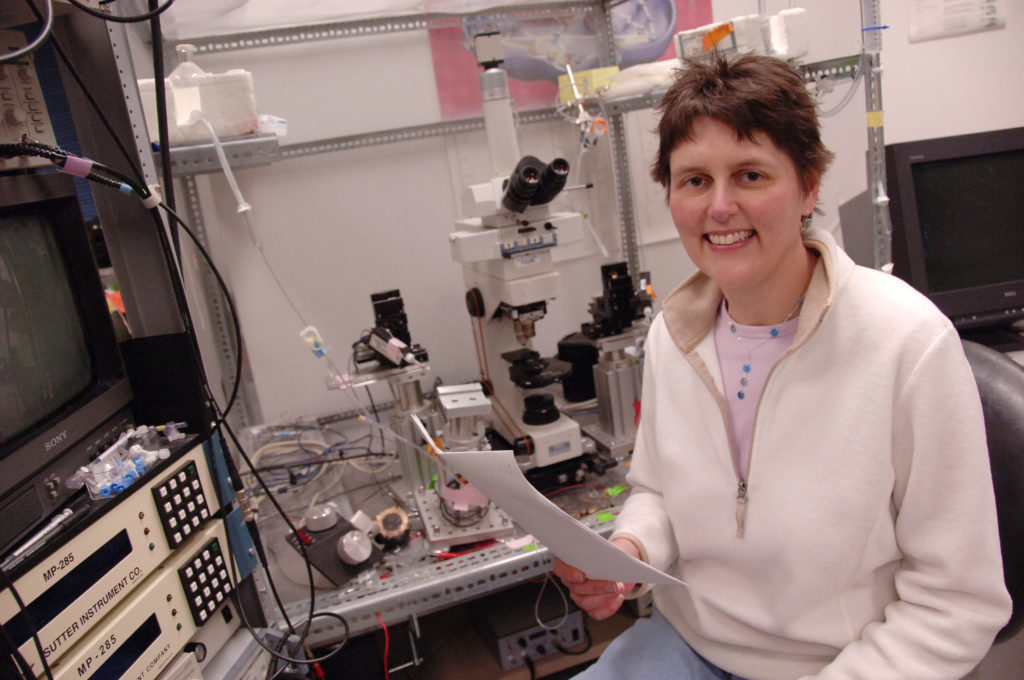
What causes hyperexcitability? Dr. Kimberly Huber seeks to understand how FMRP regulates connections between brain cells and the function of brain circuits.