

Investigating Gene Reactivation to Treat Fragile X Syndrome
With a $180,000 grant from FRAXA Research Foundation, Dr. Jeannie Lee and her team at Harvard are working to reactivate the gene that is silenced in Fragile X syndrome.

Mechanisms of Tolerance to Chronic mGluR5 Inhibition
FRAXA supported research showing mGluR5 antagonist tolerance develops quickly in Fragile X models, guiding new strategies to prevent or overcome it.

Prefrontal Cortex Network (PFC) Dynamics in Fragile X Syndrome
The team has shown that Fragile X mice have major prefrontal cortex deficits in Fragile X mice. Finding ways to overcome this could reveal new intervention strategies.
Prefrontal Cortex Network (PFC) Dynamics in Fragile X Syndrome
With a $90,000 grant from FRAXA Research Foundation from 2016-2017, Dr. Daniel Johnston and Dr. Jenni Siegel at the University of Texas at Austin are analyzing pre-frontal cortex (PFC) dysfunction in the Fragile X model. They have preliminary evidence that Fragile X mice are severely impaired in a prefrontal cortex (PFC)-dependent task.

Correcting Defects in Astrocyte Signaling in Fragile X Syndrome
Astrocytes, brain cells which support neurons, do not transmit signals. Fragile X treatment strategies have been proposed based on correction of “astrocyte phenotypes”.

Altered Neural Excitability and Chronic Anxiety in a Mouse Model of Fragile X
With a $35,000 grant from FRAXA, Dr. Peter Vanderklish at Scripps Research Institute, and colleagues, explored the basis of anxiety in Fragile X syndrome.
Development of a High-Content Synapse Assay to Screen Therapeutics for Fragile X Syndrome
This work established a high-content synaptic imaging platform for Fragile X cells to test many candidate drugs for their ability to repair synapse structure and function.

Clinical Trial of Ganaxolone in Patients with Fragile X Syndrome
Dr. Frank Kooy and colleagues conducted a double blind crossover trial of ganaxolone in patients with Fragile X with FRAXA funding. Results of this study were mixed.

Preclinical Testing of Sleep-Wake Patterns as an Outcome Measure for Fragile X
FRAXA Research Foundation awarded $122,000 to Dr. Cara Westmark at the University of Wisconsin at Madison for studies of sleep disorders in Fragile X syndrome.

PIKE as a Central Regulator of Synaptic Dysfunction in Fragile X Syndrome
With $255,000 from FRAXA Research Foundation, Dr. Suzanne Zukin at Albert Einstein College of Medicine studied signalling pathways in Fragile X syndrome.
A Kinase Assay as a Biomarker for Fragile X Syndrome
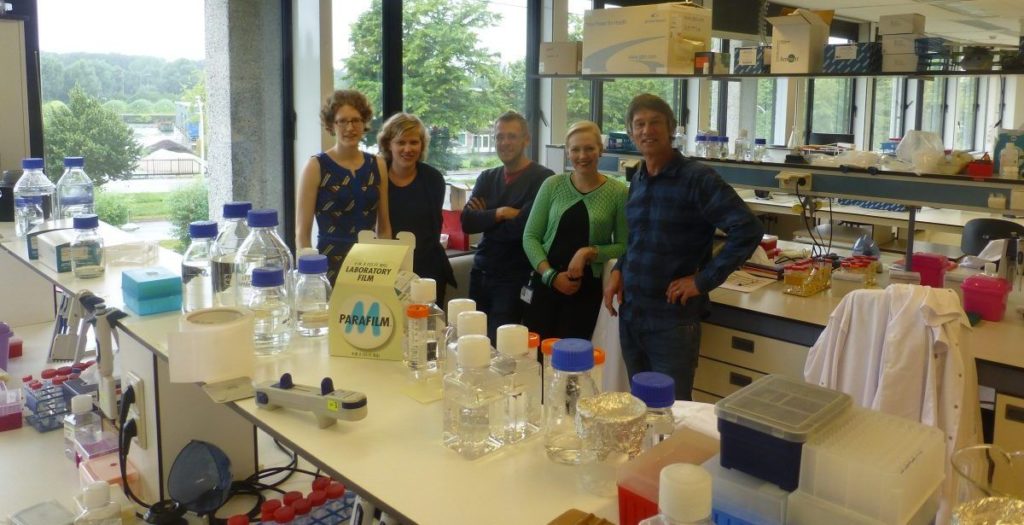
Dr. Frank Kooy at the University of Antwerp investigated whether phosphorylation abnormalities are a suitable biomarker for clinical trials in Fragile X syndrome.

Sensory Hypersensibility in Fragile X Syndrome and BK Channel Openers
With $366,100 in FRAXA funding, researchers tested BK channel–opening drugs to fix sensory abnormalities in Fragile X mice; early results showed broad behavioral rescue.

Fragile X Mutant Mouse Models
With $375,000 in grants from FRAXA, Dr. David Nelson developed an array of advanced mouse models of Fragile X. These models are available at Jackson Labs (JAX).

Repurposing Drugs to Dampen Hyperactive Nonsense-Mediated Decay in Fragile X Syndrome
FRAXA-funded research showed nonsense-mediated mRNA decay is overactive in Fragile X, pointing to existing NMD-suppressing drugs like caffeine as potential treatments.

Abnormalities of Synaptic Plasticity in the Fragile X Amygdala
With FRAXA funding, Dr. Sumantra Chattarji at NCBS explored how Fragile X alters amygdala function. Results were published.

Targeting AMP-Activated Protein Kinase Pathway in Fragile X Syndrome
With this grant from FRAXA, Dr. Peter Vanderklish explored AMPK activators to treat Fragile X. Both metformin and resveratrol, found in red wine, are AMPK activators.
Fruit Flies to Model and Test Fragile X Treatments
Boosting cAMP signaling restores memory and fixes brain-signaling defects in Fragile X models, suggesting diabetes drugs like metformin may help.
Analysis of Developmental Brain Dysfunction in Families
No strong behavioral similarities were found between parents and children with Fragile X, indicating family history may not guide clinical trial recruitment.

The Endocannabinoid System in a Mouse Model of Fragile X Syndrome
Fragile X disrupts endocannabinoid signaling. This study in mice demonstrated that correcting it may calm brain hyperexcitability and improve symptoms.

Inhibitors of STEP as a Novel Treatment of Fragile X Syndrome
STEP inhibition reversed behavioral and synaptic Fragile X deficits in mice (Neuropharmacology, 2018), highlighting STEP as a promising treatment target.

Molecular Mechanisms of Cytoskeletal Regulation by FMRP
With FRAXA funding, Dr. Jaffrey linked FMR1 loss to abnormal dendritic spines via RhoA signaling, suggesting RhoA-targeted therapies could help treat Fragile X.

Clinical Trials Outcome Measures
There is a critical need for reliable biomarkers and clinical outcome measures for Fragile X syndrome. Treatment trials depend on this.

Targeting the Endocannabinoid System in Adult Fragile X Mice
CB1 blockade with rimonabant reversed cognitive, sensory, and seizure symptoms in FXS mice, highlighting the endocannabinoid system as a therapeutic target.

Channelopathies: Altered Ion Channels in Fragile X Syndrome
Ion channel defects (“channelopathies”) in Fragile X disrupt neuron firing and network balance. This study maps these channel changes to guide targeted treatments.