
Circular RNA Delivery of FMRP in a Human Neurodevelopmental Model of Fragile X Syndrome
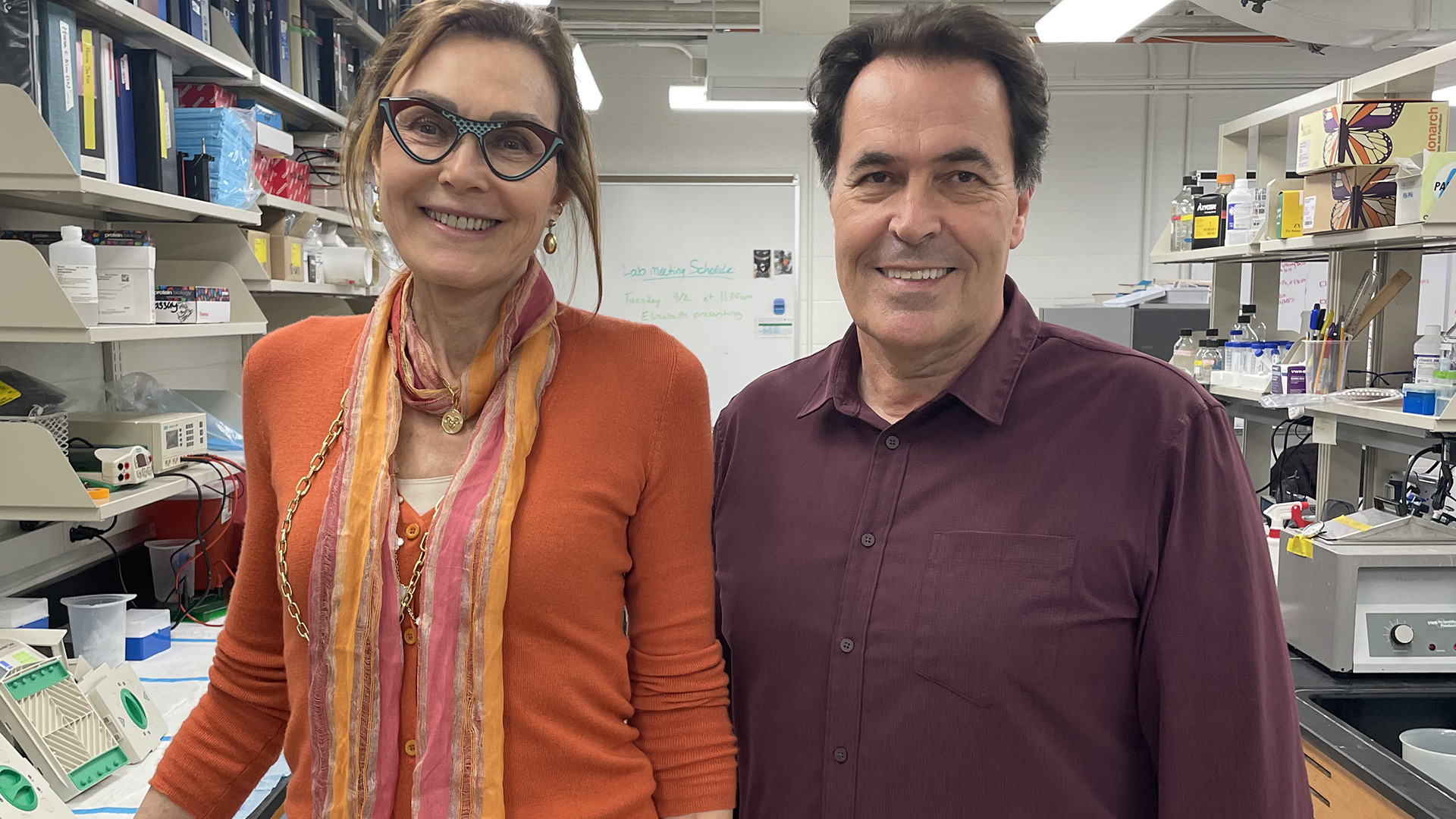
Lynne Maquat, PhD
Co-Principal Investigator
Christoph Pröschel, PhD
Co-Principal Investigator
Fang-Yu Hsu, PhD
FRAXA Postdoctoral Fellow
University of Rochester Medical School
Rochester, NY
2026-2027 Grant Funding: $200,000
Summary
This project explores a promising path toward a cure for Fragile X syndrome by restoring the missing protein, FMRP. Traditional gene therapy using viral vectors can only be delivered once. These investigators are developing a non-viral approach using circular mRNA that could potentially be given repeatedly.
Using human brain organoids grown from patient cells, the team will study how much FMRP is missing in different brain cell types and what levels are needed for normal function. These insights will help guide the development of therapies that directly correct the root cause of Fragile X — the absence of FMRP.
The Science
Fragile X syndrome (FXS) is usually caused by inactivation of the gene that encodes the protein FMRP. To date, much research on FXS has focused on understanding the many cellular processes that go wrong in the disorder and then identifying molecules that might correct one or a few of these problems.
New therapeutic approaches aimed at restoring missing proteins are opening opportunities to address the underlying causes of genetic disorders. Most gene replacement strategies developed so far rely on viral vectors. However, such vectors typically can be administered only once.
In contrast, a non-viral approach based on circular mRNA encoding the FMRP protein could potentially be administered repeatedly.
This proposal aims to use human cells from both control individuals and patients with Fragile X syndrome to generate brain organoids — multicellular structures that can differentiate into many of the cell types found in the human brain. By studying these organoids, we will examine at the individual cell level what goes wrong in Fragile X syndrome and identify the forms and levels of FMRP that are missing.
We view this work as a critical first step toward developing an effective therapy that directly addresses the underlying cause of Fragile X syndrome.
Meet the Scientists
Dr. Maquat has won many of the top international prizes in biomedical science, including the Wolf Prize, Gairdner Award, Gruber Prize, and Albany Prize, largely for her discovery and characterization of the nonsense-mediated mRNA decay (NMD) pathway, a key RNA quality-control system relevant to many diseases. She has received several grants from FRAXA for her studies in Fragile X.
Dr. Pröschel is a neuroscientist at the University of Rochester Medical Center whose research focuses on neural stem cells, glial biology, and mechanisms of brain development and repair. His work investigates how brain cell populations develop and respond to injury or disease, with the goal of identifying pathways that could support regeneration and improved treatments for neurological disorders.
Recent work of Drs. Maquat and Pröschel was featured in a 2025 news story by Emily Boynton at the University of Rochester, Fragile X Syndrome: What Happens in the Brain?