
Preclinical Testing of High Fat/Low Carb Diets in Fragile X Mice and Cells
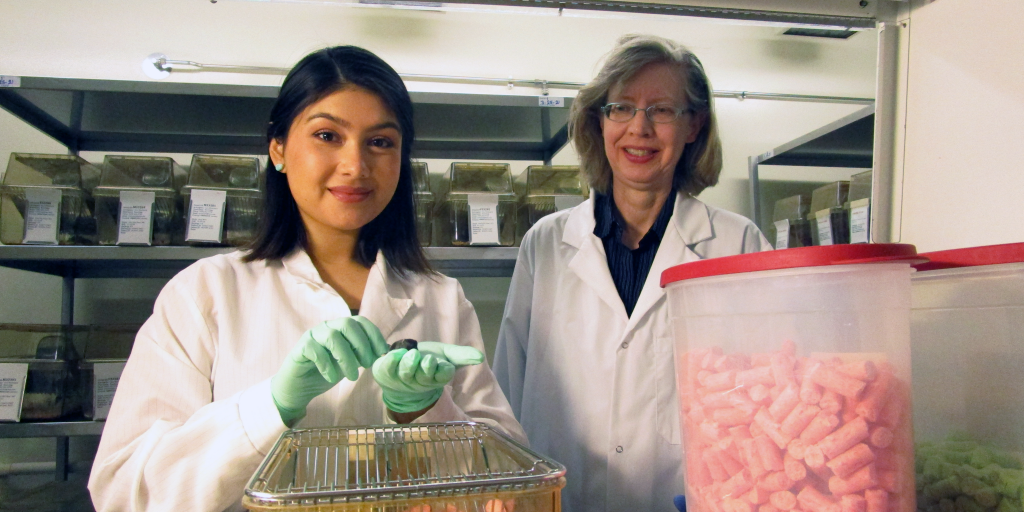
Cara Westmark, PhD
Principal Investigator
FRAXA Fellow
University of Wisconsin-Madison
Madison, WI
Summary
Could a high fat/low carb diet improve behavior and boost learning skills in children with Fragile X?
Dr. Cara Westmark thinks so. She made an interesting discovery while working on a previous FRAXA grant, where her mice had reduced seizures and less hyperactivity when fed a high fat keto diet. With this grant, her team will use mice to determine if more palatable Atkins-type diets can improve sleep and boost learning skills for those with Fragile X.
The Results
Preclinical testing of high-fat/low-carb (including ketogenic) diets in Fragile X mouse models by Dr. Cara Westmark showed that these diets selectively reduce audiogenic seizures and hyperactivity in male Fmr1 knockout mice (but not females), while also improving certain sleep-wake cycle abnormalities such as reducing excessive wakefulness during active periods. The team's study on adult-initiated ketogenic diet therapy found it increases non-REM and REM sleep during the dark (active) cycle in both wild-type and Fragile X mice, decreasing wake time, but it does not correct light-cycle sleep deficits in Fragile X mice and may even induce some sleep disruptions in controls.
Overall, these diets offer sex-specific benefits for seizures and activity in males without broadly improving learning, memory, anxiety, or all sleep issues.
Key publication from this work: "Adult Inception of Ketogenic Diet Therapy Increases Sleep during the Dark Cycle in C57BL/6J Wild Type and Fragile X Mice"
The Science
By Cara Westmark, PhD
The ketogenic diet is highly effective at attenuating seizures in refractory epilepsy, and accumulating evidence in the literature suggests that it may be beneficial in treating autism. To our knowledge, no one has studied ketogenic, Atkins or other high fat/low carbohydrate diets in any model of Fragile X syndrome (FXS).
We tested the effects of chronic ketogenic diet treatment on seizures, body weight, ketone and glucose levels, diurnal activity levels, learning and memory, and anxiety behaviors in Fmr1-knockout (Fmr1-KO) and littermate control mice as a function of age (Westmark et al, 2020). The ketogenic diet selectively attenuates seizures in male but not female Fmr1-KO mice and differentially affects weight gain and diurnal activity levels dependent on Fmr1 genotype, sex and age.
With this FRAXA Fellowship, we will test less stringent high fat/low carbohydrate diets. Specific Aims include:
- Screen dietary percent fat and carbohydrate content for efficacy in attenuating audiogenic-induced seizures (AGS) in Fmr1-KO mice.
- Test high fat/low carbohydrate diets on circadian activity levels in Fmr1-KO mice.
- Develop a cell culture model to screen the effects of diet on neuronal cells. For example, we will test the effects of varied fats, sugars, proteins, ketones and ketogenic amino acids and their ratios on mouse primary Fmr1-KO neuronal cell phenotypes (viability, growth, mitochondrial function).
We expect these experiments will determine if a macronutrient constituent of the ketogenic diet mediates the positive biological effects in Fmr1-KO mice. We will test both male and female mice to determine sex-specific differences. The primary neuronal cell experiments will establish a cell culture model with growth conditions in a low carbohydrate environment. Overall, the findings will provide proof-of-principle evidence to pursue testing high fat/low carbohydrate diets for the treatment of FXS.
Grant Post Revisions
- 2024/06 - Added The Results.
- 2021/05 - Original grant post published.