fNIRS to Measure Treatment Response in Young Children with Fragile X
Craig Erickson, MD, PhD
Principal Investigator
Elizabeth Smith, PhD
FRAXA Fellow
Cincinnati Children’s Hospital
Cincinnati, OH
2019-2021 Grant Funding: $90,000
With support from the Fragile X Alliance of Ohio
Summary
FRAXA has awarded a $90,000 Fragile X research grant to Dr. Craig Erickson and Dr. Elizabeth Smith at Cincinnati Children’s Hospital to test an exciting new brain imaging technique, functional near-infrared spectroscopy (fNIRS), in children who have Fragile X syndrome.
The Results
The encouraging finding was that children with FXS showed clear activation to speech in primary auditory regions and a left-leaning (“language side”) response to speech, similar to typically developing children; in the FXS group, stronger left-sided speech responses were linked with better verbal abilities.
The key difference was that, unlike controls, children with FXS did not consistently “differentiate” speech from matched non-speech noise in the left auditory cortex, and they showed a stronger overall brain response to the non-speech sounds. In plain terms, the basic brain machinery for responding to speech seems present, but the system may be over-responsive to non-speech sounds, which could make it harder for the brain to prioritize speech signals during development — an idea consistent with sensory sensitivity often seen in FXS.
The team's findings, Specialization of the brain for language in children with Fragile X Syndrome: a functional Near Infrared Spectroscopy study were published in 2024.
The Science
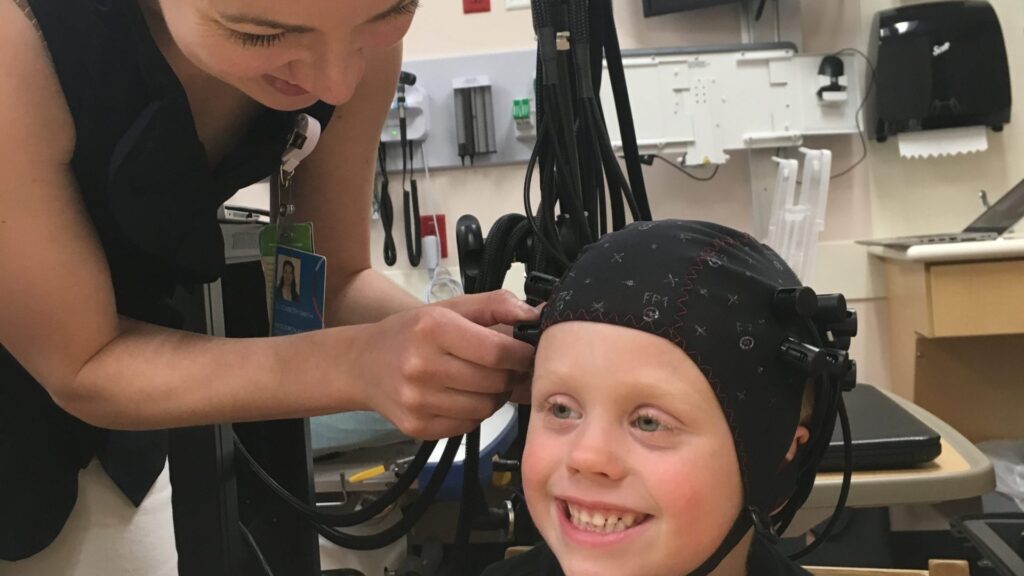
Functional near-infrared spectroscopy (fNIRS) is a safe, non-invasive way to measure brain activity. This remarkable new technique uses light sources and sensors on the scalp to build a heat map of the brain in action.
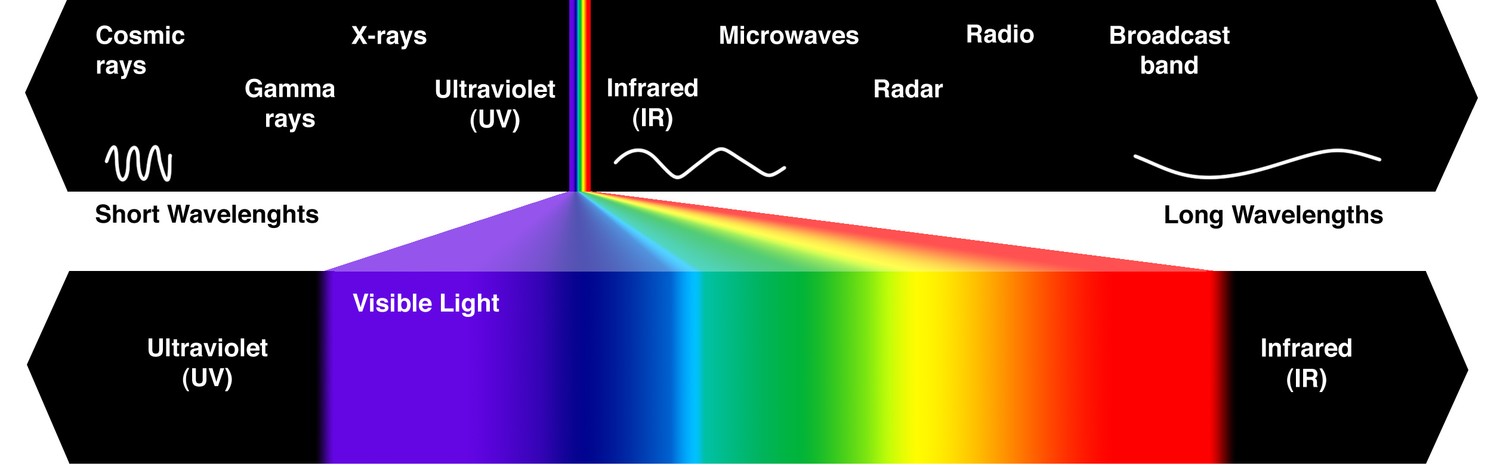
When brain cells work, they use energy and oxygen, changing the concentration of the molecules around them. fNIRS uses infrared light to track changes in those molecules in real time. Near infrared light waves travel harmlessly to the cortex of the brain and back, and the amount of light absorbed during that trip changes when brain cells are using a lot of oxygen. The result is a detailed map of how much oxygen is being used by cells in different areas of the brain.
This technique is portable (and in the near future, likely, wireless), making it possible to use at home. It is less likely to be bothersome or frightening to babies and children and other individuals with sensory sensitivities or high levels of anxiety. In addition, it is not necessary that participants be still or sleeping, as can be true with EEGs or MRIs.
First fNIRS Study in Fragile X
It has been shown that kids with other neurodevelopmental disorders have abnormal fNIRS patterns, but this is the first study to be done in Fragile X. The investigators will see how the fNIRS responses are different from neurotypical children and correlate the responses with Electroencephalogram (EEG) is a non-invasive way of measuring the brain's electrical activity. EEG changes. This is important because we are pushing the limits with EEG, especially for young kids. fNIRS could be an even better outcome measure for some children than EEG.
Dr. Elizabeth Smith offered this study as an optional add-on for families participating in the NeuroNEXT FX-Learn study at Cincinnati Children’s Hospital. FX-Learn is multi-site clinical trial of AFQ056, an mGluR5 negative modulator, in combination with language intervention in young children (ages 3-6 years) with Fragile X.