
Preclinical Development and Target Deconvolution of Non-Hallucinogenic Substituted Tryptamines (SubTryps) for Fragile X Syndrome
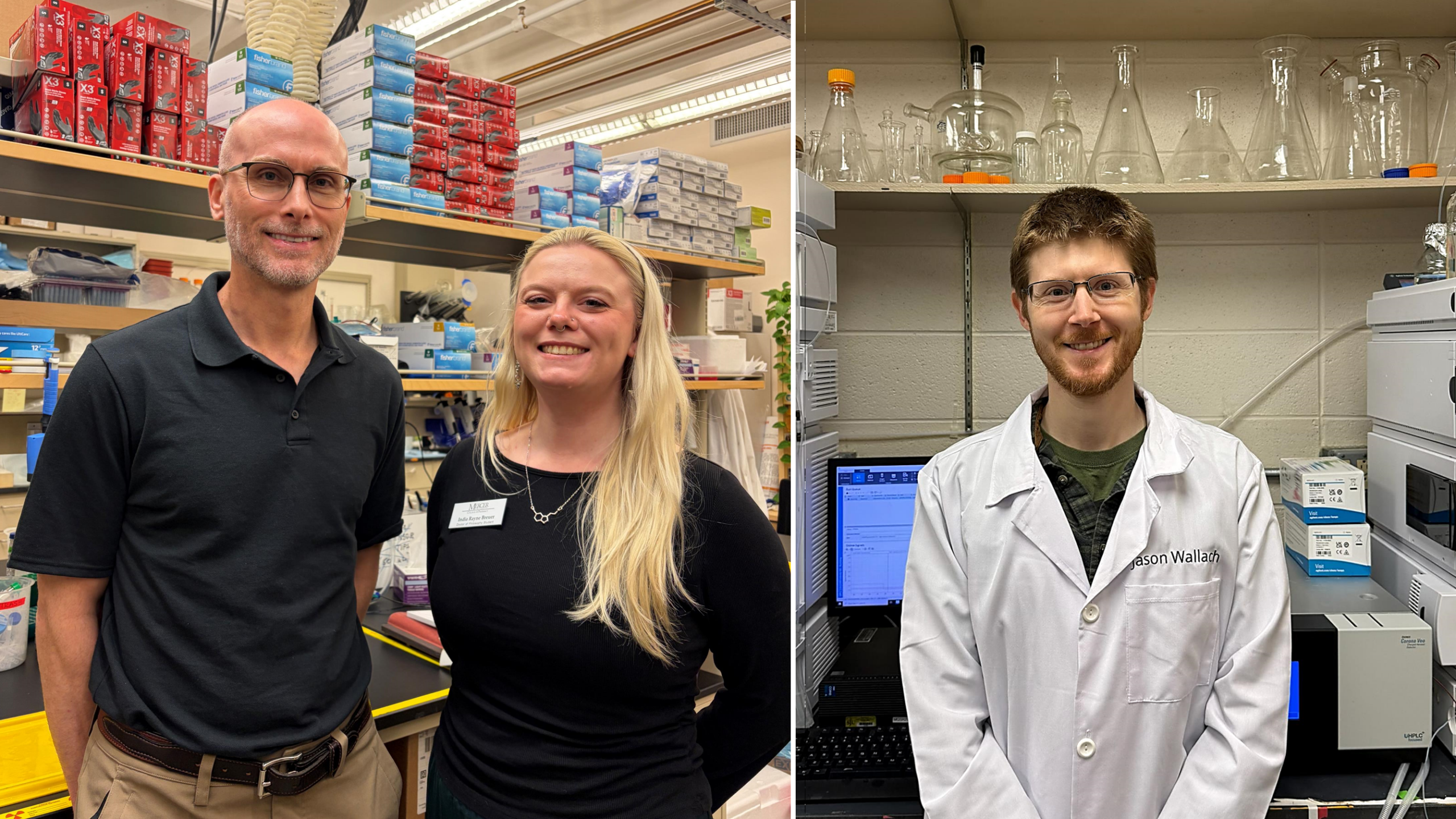
Clinton E. Canal, PhD
Principal Investigator
India R. Breuer
PharmD/PhD Student
Mercer University
Atlanta, GA
Jason V. Wallach, PhD
Co-Investigator
St. Joseph’s University
Philadelphia, PA
2026-2028 Grant Funding: $100,000
Summary
Researchers are working to turn a promising compound into a safer potential treatment for Fragile X syndrome. By keeping its helpful effects while removing the hallucinogenic effects, they hope to reduce seizures and improve learning.
The Science
by Clinton Canal, PhD
In the brains of individuals with Fragile X syndrome (FXS), the absence of a key protein (FMRP) causes brain cells to become overactive. This “electrical noise” contributes to sensory issues, for example sensitivity to sound, as well as learning and memory impairments, and roughly 20% of individuals with FXS experience epileptic seizures. Currently, there are no FDA-approved medications that specifically treat the underlying causes of these symptoms.
Our research began with a compound called DPT, a tryptamine-based molecule that has been known for decades as a psychedelic or hallucinogen because of its effects on the brain’s serotonin system. Surprisingly, we discovered that DPT is highly effective at blocking seizures in an FXS mouse model. Importantly, we found that DPT’s seizure-blocking activity is separate from the mechanisms responsible for hallucinogenic effects. Instead, DPT activates other receptors in the brain, including the somatostatin 4 receptor, which act as natural “brakes” that calm overactive neurons.
The goal of this project is to isolate the seizure-blocking properties of DPT from its hallucinogenic activity. We have already created a related compound, 6-F-DPT, that prevents seizures in the FXS mouse model without producing hallucinogenic-like behavior. In this project, we will synthesize 20 new variations of these compounds to find the most potent "brakes" for the brain. We will test whether these compounds improve seizures as well as learning and memory in the FXS model using a new cognitive assay.
The goal is to identify which brain receptor is the most important target for improving FXS symptoms, providing a clear roadmap for future clinical trials. While gene-targeted therapies are an exciting long-term strategy for curing FXS, there is also an urgent need for treatments that can help individuals living with FXS today. By transforming a known compound scaffold into a safe, targeted therapy approach, we hope to accelerate progress toward new medicines that improve sensory processing and learning for everyone affected by Fragile X syndrome.
Meet the Scientists
Dr. Canal's laboratory at Mercer University studies serotonin receptors and related signaling pathways in the brain, with a particular focus on developing new neuropsychiatric therapeutics. He has identified unexpected therapeutic properties of tryptamine-based compounds, including the discovery that DPT can suppress seizures in a Fragile X mouse model through mechanisms distinct from its hallucinogenic effects.
India R. Breuer, a PharmD/PhD student at Mercer University, focuses on medicinal chemistry, pharmacology, and the development of novel compounds designed to selectively target brain receptors involved in Fragile X syndrome. She is helping to synthesize and evaluate new DPT-derived molecules for their ability to reduce seizures and improve cognitive function.
Dr. Jason V. Wallach is an Associate Professor of Pharmaceutical Sciences at Saint Joseph's University. An internationally recognized expert in medicinal chemistry and psychoactive compounds, Dr. Wallach specializes in designing and synthesizing novel tryptamine analogs and related molecules. His expertise helps the team develop compounds that retain therapeutic benefits while eliminating unwanted hallucinogenic effects.
Why This Collaboration Matters
The scientists bring together complementary expertise in neuroscience, pharmacology, medicinal chemistry, and drug development.
FRAXA has supported Dr. Canal’s research for a number of years, helping advance his work on new treatment approaches for Fragile X. This collaboration builds on that foundation by pairing his expertise in pharmacology and disease-model testing with Dr. Wallach’s medicinal chemistry expertise and India Breuer’s work developing and evaluating new compounds.
By working together, the team can design new molecules, understand how they work in the brain, and test whether they improve seizures, learning, and memory, creating a path for the most promising candidates to move toward clinical development.