Harnessing FMRP Autoregulation to Develop a Safer and More Effective Gene Therapy for Fragile X Syndrome
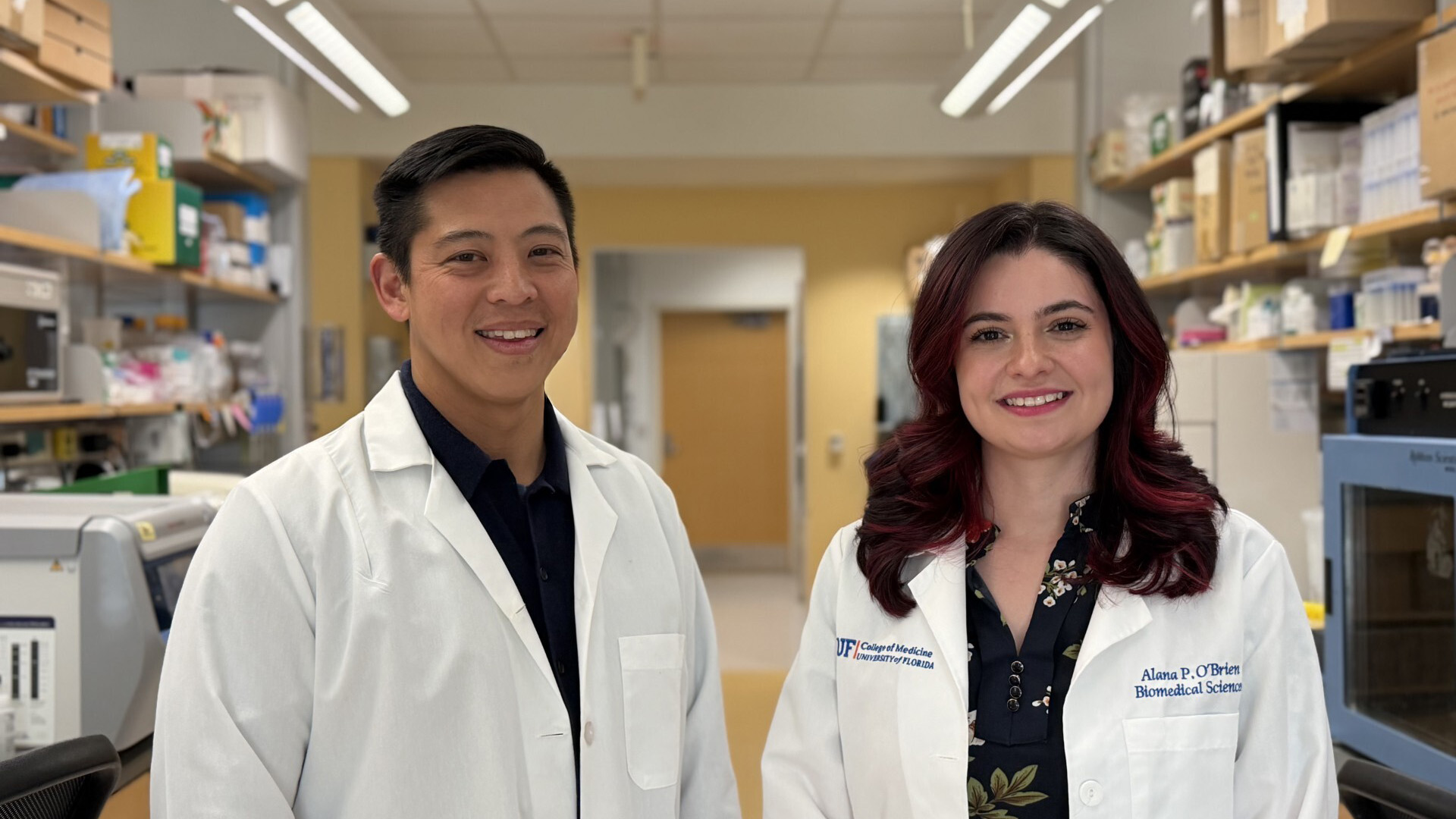
Eric T. Wang, PhD
Principal Investigator
Alana O’Brien
FRAXA Fellow
University of Florida
Gainsville, FL
2026-2027 Grant Funding: $100,000
Summary
This team is developing a next-generation Fragile X gene therapy that restores the missing FMRP protein, with a built-in “safety dial” to prevent making too much. They will include small, natural control elements from the FMR1 gene in the therapy. The goal is a smarter treatment that automatically adjusts how much FMRP it produces based on what each brain cell needs, reducing the risk of side effects.
The Science
Fragile X syndrome (FXS) is caused by loss of the FMRP protein, produced from the FMR1 gene. Because FMRP is a master regulator of many RNAs in neurons, replacing it with gene therapy is an attractive curative strategy. However, it comes with a major challenge: FMRP levels must be tightly controlled. Too little won’t help, and too much FMRP can be harmful, which makes conventional “always-on” gene delivery risky, especially when dose and expression can vary from cell to cell and person to person.
This project proposes a next-generation FMRP gene therapy that can self-regulate, using the same kinds of RNA control mechanisms the natural FMR1 gene uses in healthy cells. FMRP is an RNA-binding protein that helps regulate not only other RNAs, but also its own production—through features like alternative splicing and regulatory regions in the 5′ and 3′ untranslated regions (UTRs) that respond to the cell’s state. The team’s innovation is to miniaturize these built-in FMR1 regulatory “dials” so they can fit inside an AAV gene therapy cassette, creating an FMRP payload that can automatically dial down its own expression, thus preventing toxicity from excessive FMRP and also fulfilling more complex functions of the protein.
In principle, this could make gene therapy safer and potentially more effective, because it aims to restore properly regulated FMRP that can respond to the brain’s normal signaling environment.
Meet the Scientists
Eric Wang, PhD, is a faculty investigator at the University of Florida College of Medicine in the Center for NeuroGenetics, where his labdevelops smarter gene therapies that can sense and regulate their own expression using natural RNA control mechanisms such as alternative splicing and autoregulation. He brings deep expertise in RNA biology and translational tool building, with an active, well supported program focused on self regulated gene therapy cargoes and a track record of moving platform ideas toward practical therapeutic applications. He also co founded Kate Therapeutics, a company focused on AAV based gene therapies for muscle and heart diseases that was acquired by Novartis for $1.2 billion.
Alana O’Brien is a PhD candidate and FRAXA Fellow in the Wang lab at the University of Florida, where she is leading this FRAXA supported project. Her work focuses on post transcriptional mechanisms to regulate gene therapy and on building tunable control elements to help fine tune FMRP expression.