
Lovamix: Clinical Trial of Combined Treatment of Minocycline and Lovastatin in Fragile X Syndrome
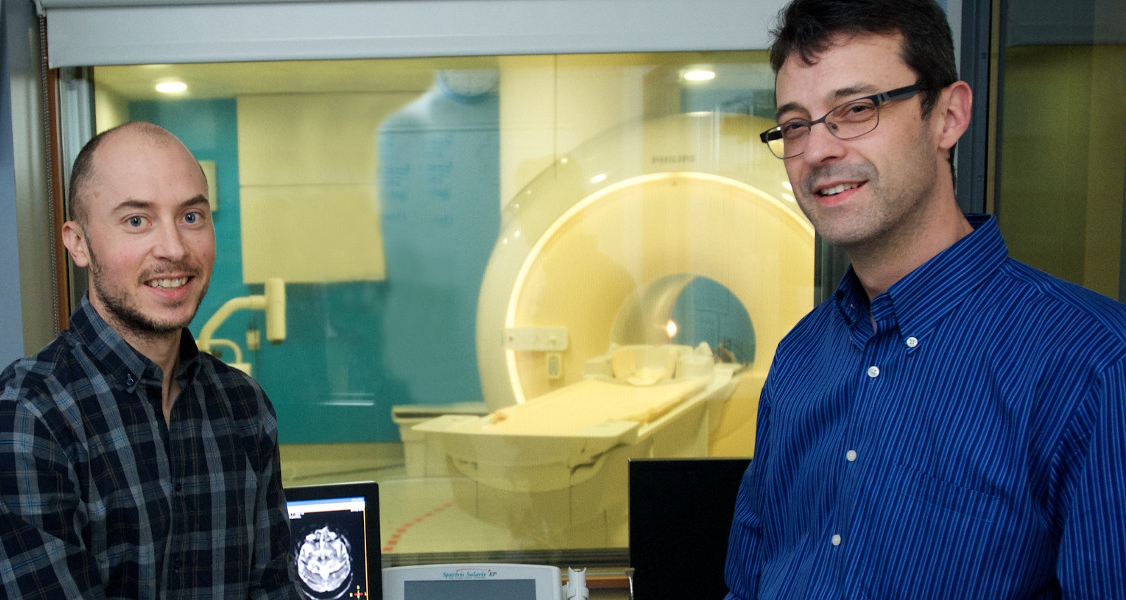
Francois Corbin, MD, PhD
Principal Investigator
Jean-Francois LePage, PhD
Co-Principal Investigator
Université de Sherbrooke
Sherbrooke, Quebec, Canada
2012, 2015-2017 Grant Funding: $110,714
Summary
With a grant from the FRAXA Research Foundation awarded over 2015-2017, Dr. Francois Corbin and Dr. Jean-Francois LePage at the Universite of Sherbrooke tested the safety and synergistic effects of lovastatin and minocycline in patients with Fragile X syndrome. FRAXA previously funded an preliminary pilot trial of lovastatin in 2012, for $44,000.
The Results
The LovaMiX trial results indicate the treatment was safe with only mild side effects (like headaches or slightly raised muscle enzymes in some people), and no one had serious problems. After about 20 weeks, caregivers reported big improvements: overall difficult behaviors dropped by around 40%, plus better social skills, less anxiety, improved daily function, and calmer actions.
A follow-up brain test (using gentle magnetic pulses called TMS to check brain activity) showed the combo calmed overactive brain signals in these patients, which matches what we see as a core issue in Fragile X. This suggests the drugs might target the real brain changes, not just symptoms. This was a small early study, so bigger trials are needed to confirm it works well for everyone.
The team's findings, Combining Lovastatin and Minocycline for the Treatment of Fragile X Syndrome: Results From the LovaMiX Clinical Trial, full open access in Frontiers in Psychiatry, 2021
Ancillary neurophysiological results: Neurophysiological effects of a combined treatment of lovastatin and minocycline in patients with fragile X syndrome: Ancillary results of the LOVAMIX randomized clinical trial, Autism Research, 2024
The Science
This project aims to test the safety and synergistic effect of lovastatin and minocycline combined treatment in patients with Fragile X syndrome. The hope is to improve behavior in FXS individuals. It will also seek to establish correlations between platelets biomarkers and clinical response to lovastatin and/or minocycline. Furthermore, the investigators will determine the effect of these drugs on brain activity and neurochemistry using functional magnetic resonance imaging (sMRI/fMRI) and transcranial magnetic stimulation (TMS), which may be able to assess synaptic plasticity (LTP, LTD) in patients.
Dr. LePage presented the results of this trial at the 2018 Society for Neuroscience annual meeting. Results are promising.
Earlier Pilot Clinical Trial of Lovastatin
Dr. Corbin also ran the first clinical trial of lovastatin as a potential treatment for Fragile X Syndrome, funded by FRAXA in 2012 for $44,000. Since this drug had never been tested in Fragile X patients, an open-label trial on a limited number of patients was the first step toward evaluating its safety and efficacy. This was a 12 week trial, with 16 patients ages 10-25 at the Fragile X Clinic at the Centre Hospitalier Universitaire de Sherbrooke (CHUS), Quebec, Canada.
Why Lovastatin for Fragile X?
Dr. Mark Bear and colleagues at MIT published a paper in Neuron showing that Lovastatin can reverse many signs of disease in Fragile X mutant mice. The team’s multi-level preclinical validation strongly suggests that lovastatin could have disease-modifying effects in people with Fragile X. Fortunately, these results have been known to FRAXA for some time, having been presented at the 2011 FRAXA Investigators Meeting. Shortly after that meeting, plans were laid for this pilot trial to investigate efficacy in humans.
Grant Post Revisions
- 2024/09 - Added The Results.
- 2015/09 - Original grant post published.