Remembering Dr. Susumu Tonegawa: A Legacy of Discovery in Fragile X Syndrome Research
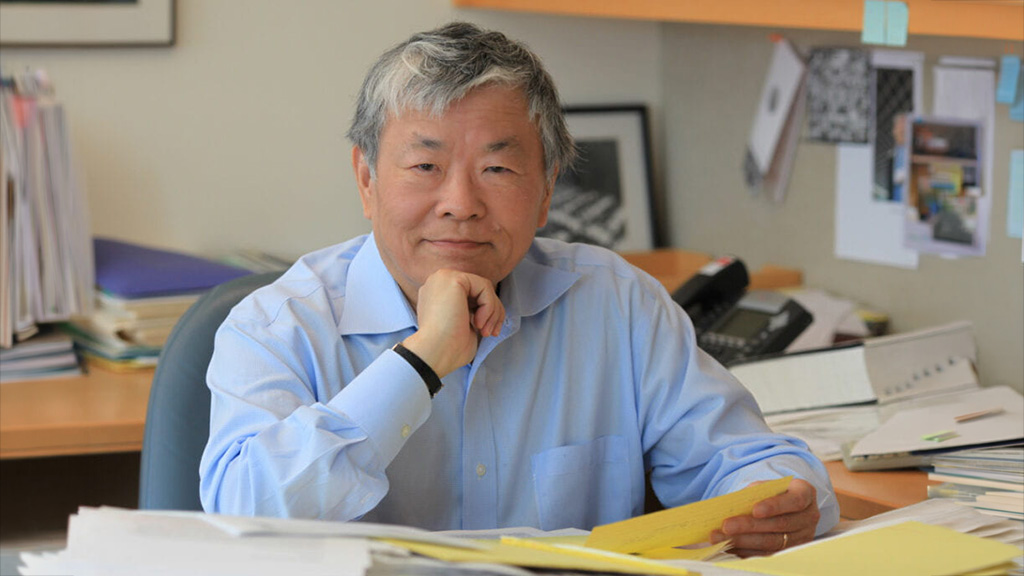
FRAXA Research Foundation remembers Susumu Tonegawa, PhD, a Nobel laureate and scientific advisor whose research helped advance the search for Fragile X syndrome treatments. Dr. Tonegawa passed away on July 11, 2026, at age 86. We are deeply grateful for his discoveries and his commitment to our mission.
Bringing Scientific Discovery to Fragile X
Dr. Tonegawa was a rare scientist whose extraordinary scientific career spanned two very different fields: immunology and neuroscience. He received the 1987 Nobel Prize in Physiology or Medicine for discovering how the immune system generates its extraordinary diversity of antibodies. He later turned his attention to neuroscience and became the founding director of MIT’s Center for Learning and Memory, which later became the Picower Institute for Learning and Memory. There, his laboratory explored how the brain forms, stores, and retrieves memories. His work helped illuminate biological processes central to learning and cognition and helped establish MIT as a leader in neuroscience.
That interest in the mechanisms of learning and memory also brought him to questions with particular significance for people living with Fragile X: how connections between brain cells are affected, and whether those changes could be corrected.
Exploring PAK Inhibition for Fragile X Treatment
Dr. Tonegawa first focused on Fragile X in 2005 when FRAXA provided $81,000 to support Dr. Tonegawa’s research at MIT, with Dr. Mansuo Hayashi serving as the FRAXA postdoctoral fellow. Their studies focused on PAK signaling, which helps regulate the structure and function of connections between brain cells.
The team demonstrated that genetically reducing PAK activity improved several Fragile X features in mice. These findings helped establish PAK as a potential treatment target and provided the scientific foundation for Afraxis, a company Dr. Tonegawa helped establish to develop drugs that inhibit PAK.
In 2013, his laboratory reported that an experimental PAK inhibitor reduced cellular and behavioral abnormalities in adult mice modeling Fragile X, with improvements following a single dose. These findings supported the possibility that some consequences of Fragile X could be reversed beyond early development, an encouraging direction for further treatment research.
Remembering a Valued Scientific Advisor
Dr. Tonegawa served on FRAXA Research Foundation’s Scientific Advisory Board from 2005 until his passing. His willingness to share his expertise with our foundation and his work opening new avenues toward treatment remain meaningful parts of his legacy for the Fragile X community.
We extend our heartfelt condolences to his family, friends, colleagues, and former trainees. We honor his memory as we continue working toward effective treatments and, ultimately, a cure for Fragile X syndrome.