
Combining Gene Reactivation with Controlled Sound Exposure to Treat Fragile X
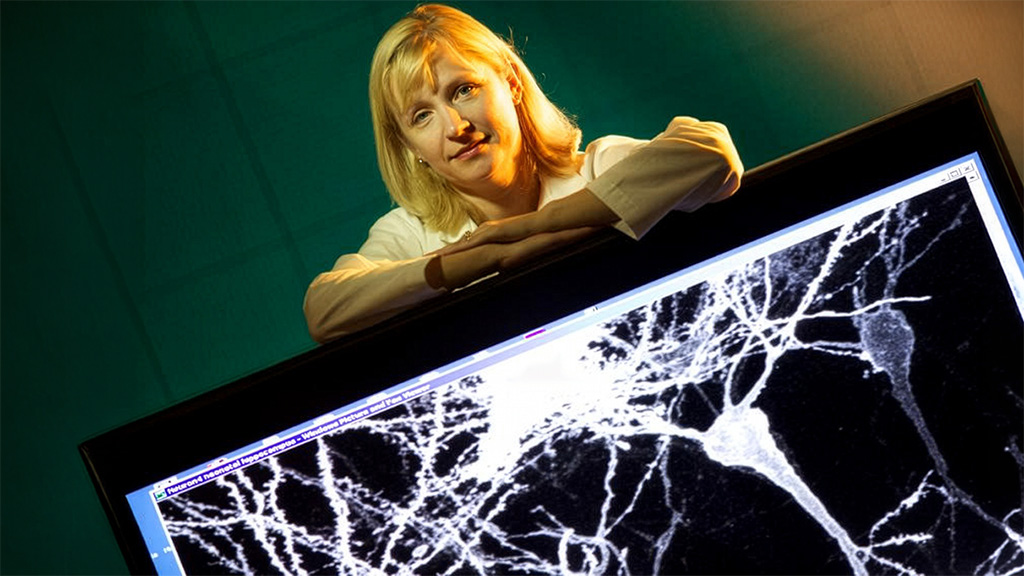
Iryna Ethell, PhD
Principal Investigator
Anna (Kulinich) Norman, PhD
Co-Principal Investigator
Anubhuti Goel, PhD
FRAXA Postdoctoral Fellow
University of California, Riverside
Riverside, CA
2022-2025 Grant Funding: $120,000
Summary
This team will explore whether reactivating the Fragile X gene in the adult brain can restore production of the missing FMRP protein and improve brain function. Using a Fragile X mouse model, they will combine gene reactivation with noninvasive acoustic stimulation and measure brain activity using EEG to determine whether this approach can produce meaningful improvements even after development.
The Science
Because FXS results from the absence of a protein, Fragile X Messenger Ribonucleoprotein (FMRP), much research has focused on testing drugs that compensate for the loss of this protein in mouse models. Recent scientific advances have opened the door to the possibility of gene reactivation and renewed expression of FMRP in humans with FXS. However, the beneficial effects of restoring FMRP — particularly in the adult brain after development — remain unclear.
The proposed studies will use a range of innovative approaches, combining gene reactivation with a noninvasive acoustic stimulation method designed to trigger beneficial changes in the adult brain. These effects will be measured using clinically relevant electroencephalography (EEG) biomarkers that could help guide the development of new treatments for FXS.
One possible reason for the failure to translate preclinical success into clinical benefit is the choice of outcome measures and biomarkers. It remains unclear to what extent complex social and cognitive behaviors—and the underlying neural circuits—are conserved across rodents and humans.
These experiments will combine two novel treatment strategies with clinically relevant EEG studies that reveal similar patterns of brain activity in mice and humans. The project brings together multidisciplinary expertise to test whether a combination of gene reactivation and acoustic stimulation, which has shown promise in the developing brain, can also produce benefits in the adult brain. The mechanisms identified in this work may help guide the development of new therapeutic approaches for FXS and autism more broadly.