Developing Small-Molecule Inhibitors of Nonsense-Mediated mRNA Decay (NMD) for Clinical Use in Treating Fragile X Syndrome
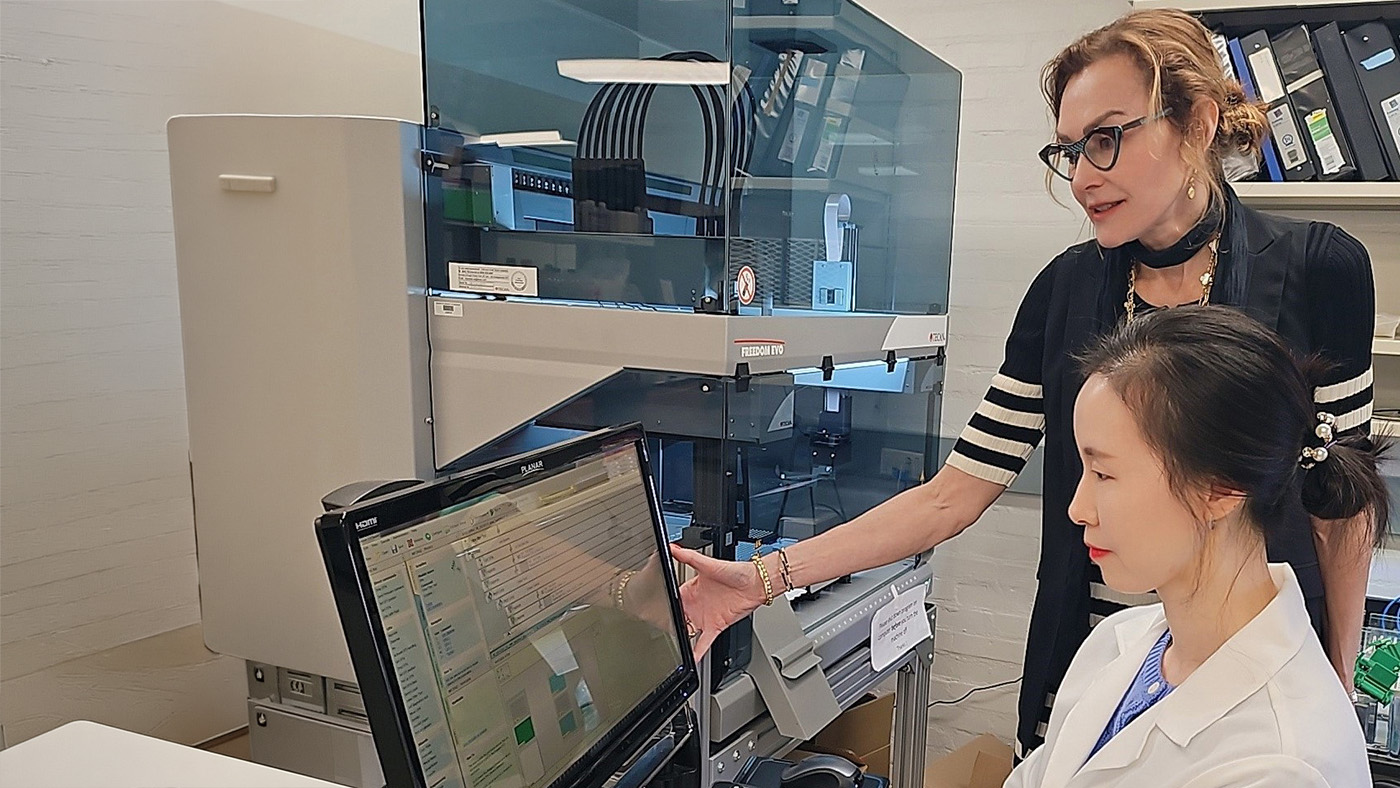
Lynne Maquat, PhD
Principal Investigator
Hana Cho, PhD
FRAXA Postdoctoral Fellow
Jordana Schmierer, PhD
FRAXA Postdoctoral Fellow
University of Rochester
Rochester, NY
2024-2025 Grant Funding: $50,000
Summary
In February 2021, FRAXA Investigator Dr. Lynne Maquat won the Wolf Prize in Medicine for discoveries about RNA that enabled development of Covid vaccines. She discovered that cells have a kind of housecleaning service called nonsense-mediated mRNA decay (NMD), which sweeps away molecular mistakes which can otherwise cause problems. With a previous FRAXA grant, she discovered runaway NMD in cells of Fragile X patients -- too much of a good thing.
Dr. Maquat and her team aim to develop clinic-ready drugs which can bring NMD back to healthy levels.
They were awarded a new grant from FRAXA in 2026 to extend this important work.
The Science
by Lynne Maquat
As mechanistic biochemists, our studies of RNA metabolism in human health and disease fortuitously led us to study Fragile X Syndrome (FXS). We discovered that the FXS disease mechanism involves hyperactivation of an important RNA process that has been the focus of our laboratory for more than 40 years: nonsense-mediated messenger RNA (mRNA) decay, which is abbreviated “NMD”.
With a previous grant from FRAXA, we found that the thousands of mRNAs in our cells that are normally degraded by NMD for proper neuronal-cell functions are degraded abnormally fast in FXS. Using cells that we derived from FXS patients, we demonstrated that each of three small molecule inhibitors of NMD normalize neuronal cell differentiation, axon function, and synaptic transmission.
While these small molecules are suitable for research, they are not suitable for use in the clinic. The goal of our work is to develop small molecule inhibitors of NMD that can be used in the clinic.